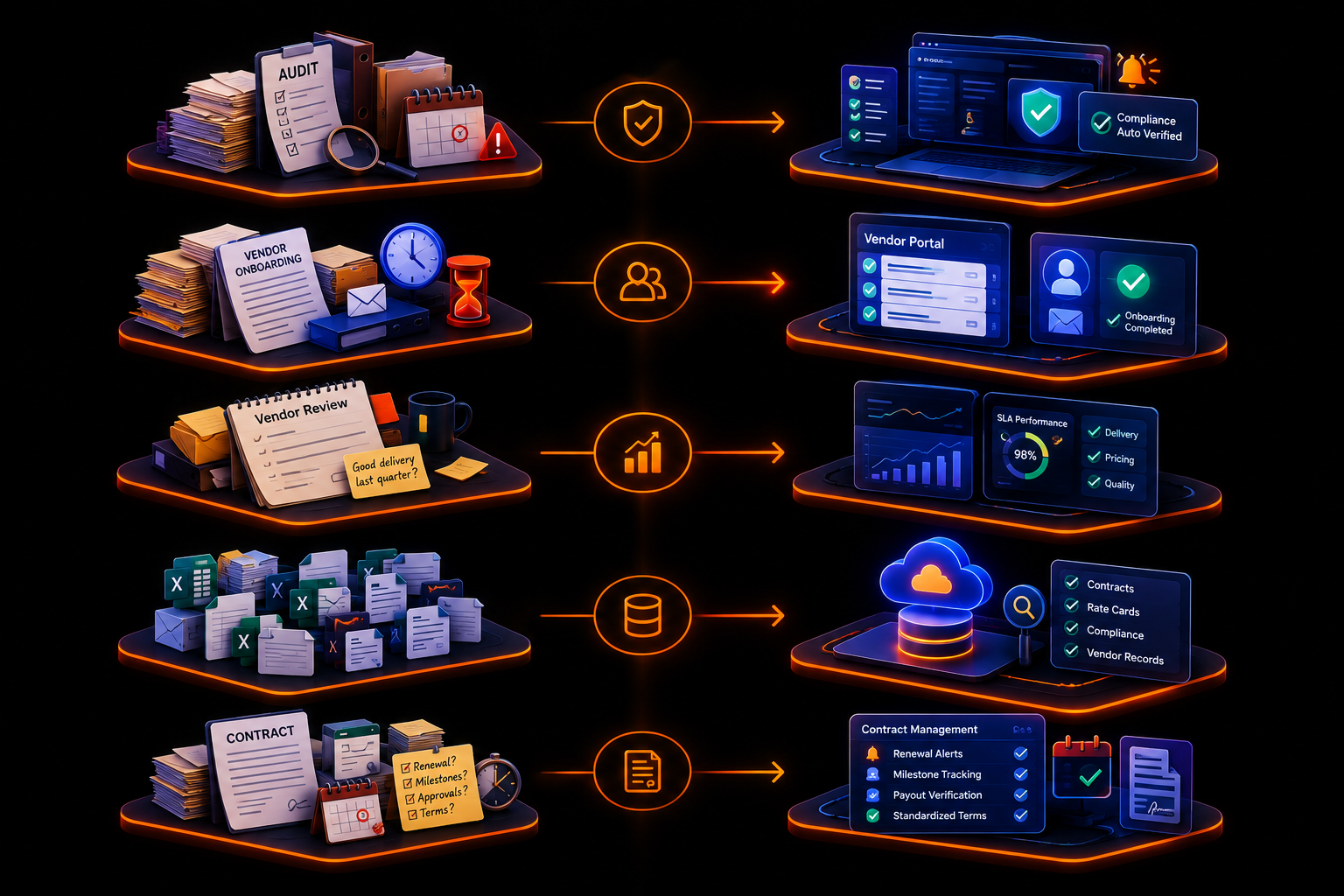
Transitioning from paper-heavy vendor panels to an automated software stack shifts procurement from reactive administration to proactive governance.
1. Continuous Risk Tracking vs. Static Annual Audits
- Traditional Empanelment: Relies on manual yearly checks, leaving months-long compliance blind spots where licenses or insurance can expire unnoticed.
- Digital VMS: Automates real-time verification and sends proactive alerts the moment compliance certifications or policies near expiration.
2. Rapid Self-Service Onboarding vs. Multi-Week Paperwork
- Traditional Empanelment: Buries new vendors in physical forms, manual data entry, and slow email approval chains.
- Digital VMS: Uses self-service vendor portals to automatically parse credentials and route approvals in days rather than weeks.
3. Data-Driven Scorecards vs. Subjective Reviews
- Traditional Empanelment: Judges vendor quality based on memory, ad-hoc feedback, or forgotten quarterly notes.
- Digital VMS: Automatically tracks objective delivery SLAs, pricing compliance, and output quality on dynamic dashboards.
4. Single Source of Truth vs. Siloed Spreadsheets
- Traditional Empanelment: Traps vendor data across isolated department spreadsheets and inbox attachments, leading to duplicate records.
- Digital VMS: Consolidates every contract, rate card, and compliance record into a single searchable enterprise database.
5. Automated SLA Governance vs. Manual Contract Tracking
- Traditional Empanelment: Requires managers to track renewal windows, milestone approvals, and contract terms manually.
- Digital VMS: Triggers automated renewal alerts, links payout milestones directly to verified deliverables, and enforces standardized terms.