Read Time:
2 Mins
AI for Campus and Early-Career Hiring: Managing Volume Without Losing Human Touch


Campus and early-career recruitment can be exhilarating — but also overwhelming. Hundreds, sometimes thousands, of applications flood in for internships, graduate programs, and entry-level roles. Manually reviewing each candidate is time-consuming, inconsistent, and often leaves little room for engagement.
AI is quietly helping recruiters handle high-volume early-career hiring, allowing them to focus on the human side of recruitment.
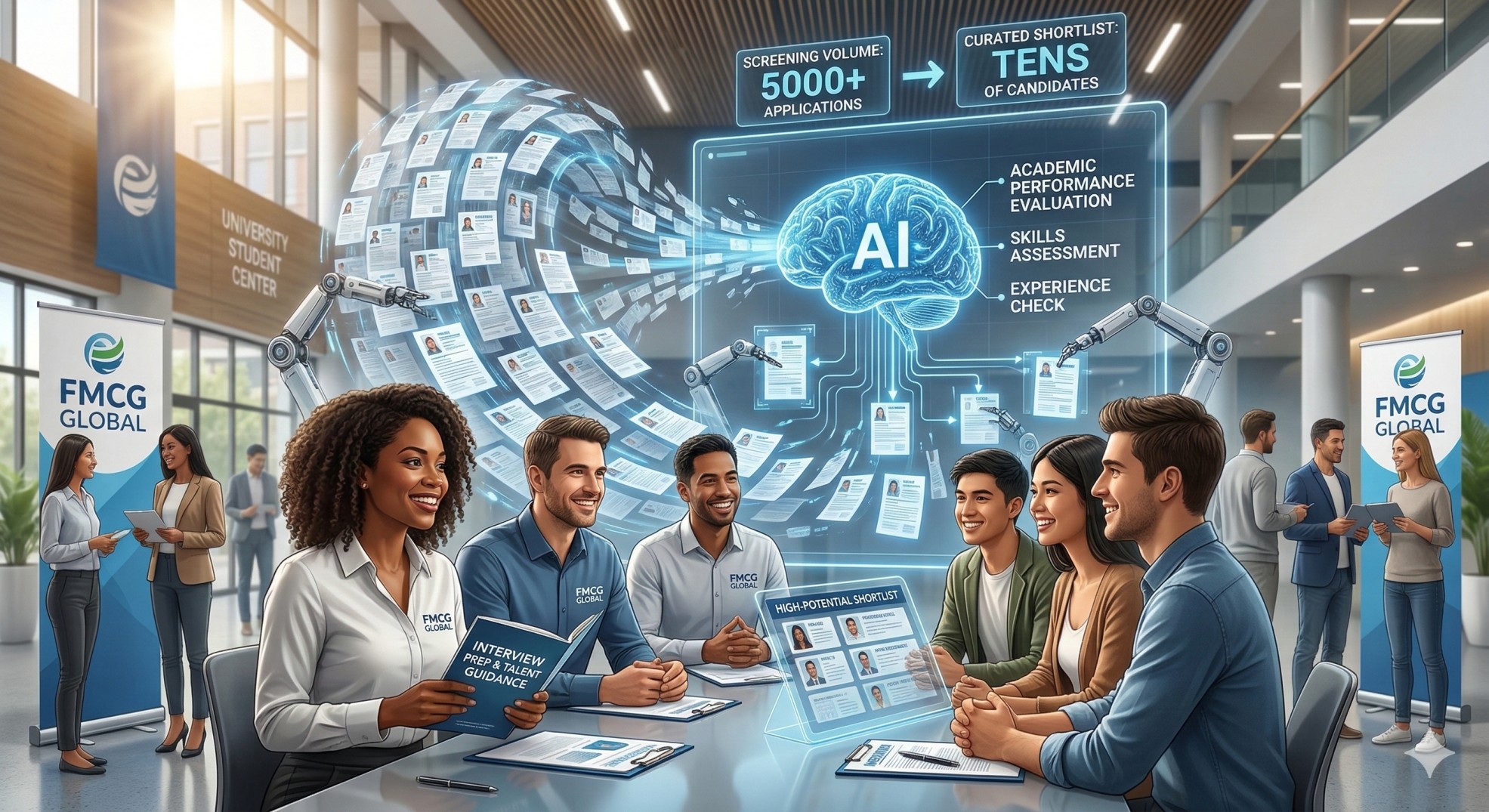
A multinational FMCG company hiring interns and entry-level employees across multiple regions faced a familiar challenge: recruiter burnout. Each campus hiring drive generated thousands of applications, and initial screening took weeks.
By introducing AI-driven pre-assessment and shortlisting, the recruitment team was able to automatically evaluate candidates on skills, academic performance, and relevant experiences. Recruiters received curated lists of high-potential candidates and could focus their energy on engaging with applicants, preparing them for interviews, and building long-term talent pipelines.
Organizations leveraging AI in campus hiring experience several benefits:
AI handles the repetitive and scalable tasks, while recruiters focus on meaningful human interaction.
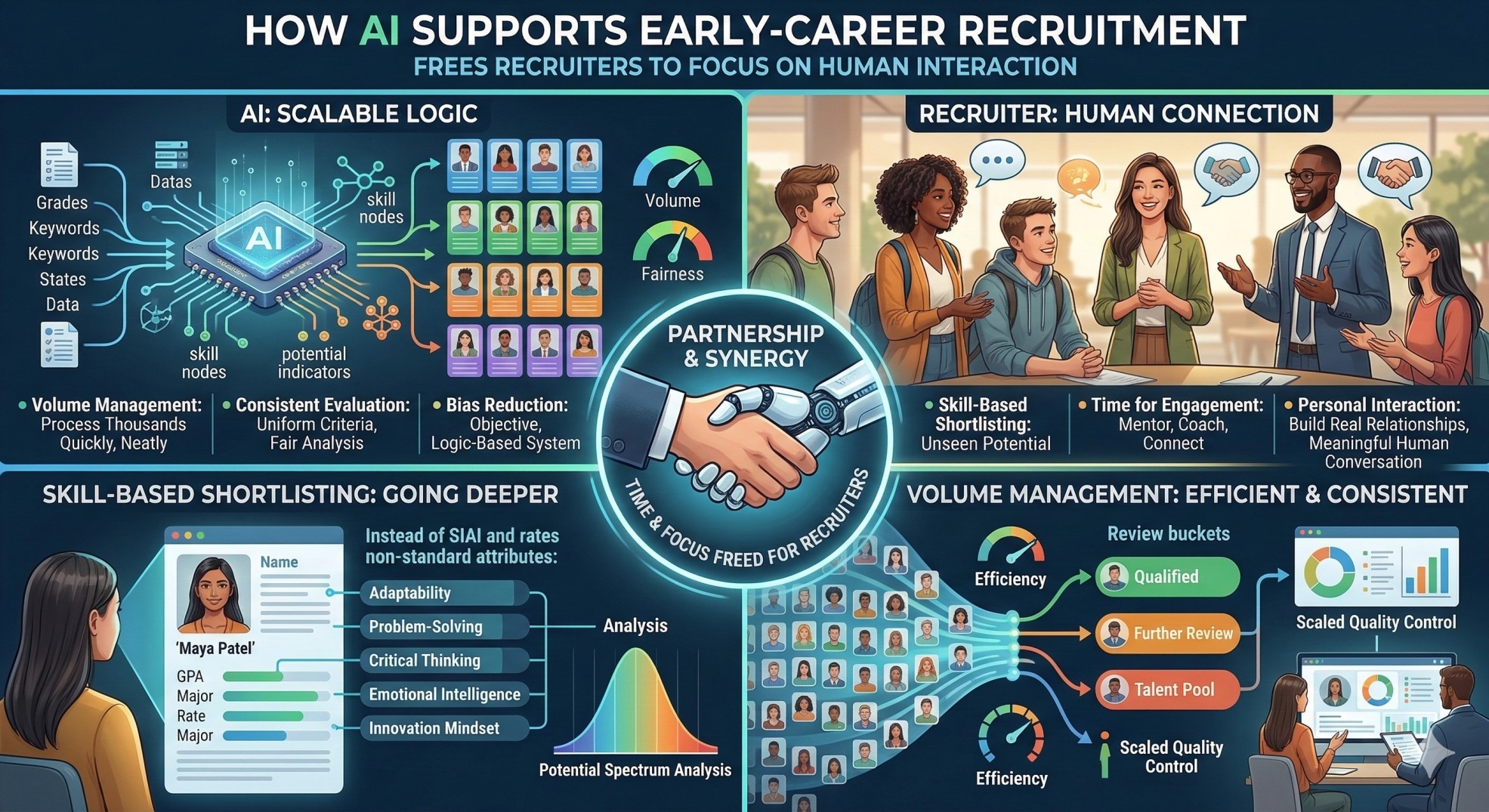
With AI managing initial screening:
This elevates early-career hiring from a transactional process to a strategic opportunity.
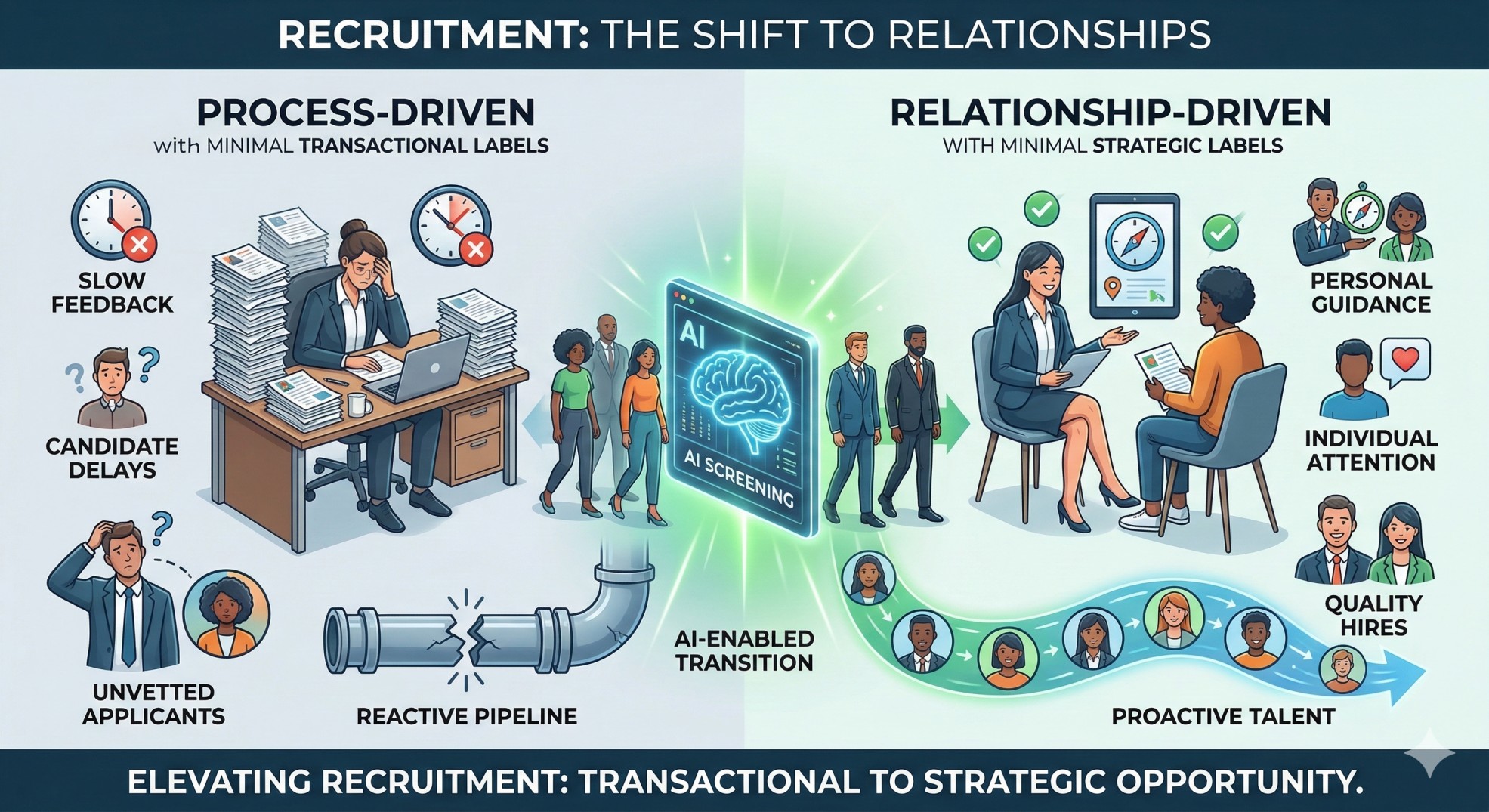
Platforms like CBREX support this model by automating resume analysis, skill assessment, and initial matching — all while keeping recruiters in control. AI provides structure and efficiency, leaving humans to focus on engagement, mentorship, and final decisions.
Campus and early-career recruitment doesn’t need to be overwhelming.
AI can handle volume, consistency, and initial evaluation, giving recruiters the bandwidth to connect, guide, and nurture candidates. The result is a recruitment process that is both efficient and human — helping organizations attract, develop, and retain the best early-career talent.


