Read Time:
3 Mins

AI in Passive Candidate Engagement: Reaching Talent Before They’re Looking

By
CBREX

Some of the best candidates aren’t actively applying — they’re passive. Finding and engaging these professionals has always been a challenge for recruiters. AI is quietly changing that, giving recruiters the insights and tools to reach top talent before roles even open.

A real-world example: connecting with passive talent

A fast-growing software company needed developers with rare skills. Traditional sourcing only reached active job seekers, leaving gaps in the candidate pool.

By using AI, the recruitment team could analyze career trajectories, skills, and professional activity across multiple platforms to identify passive candidates. AI highlighted the individuals most likely to be open to new opportunities, giving recruiters a curated shortlist to engage proactively.

The outcome? Faster access to highly qualified candidates, higher engagement, and stronger relationships — all without sacrificing recruiter control.

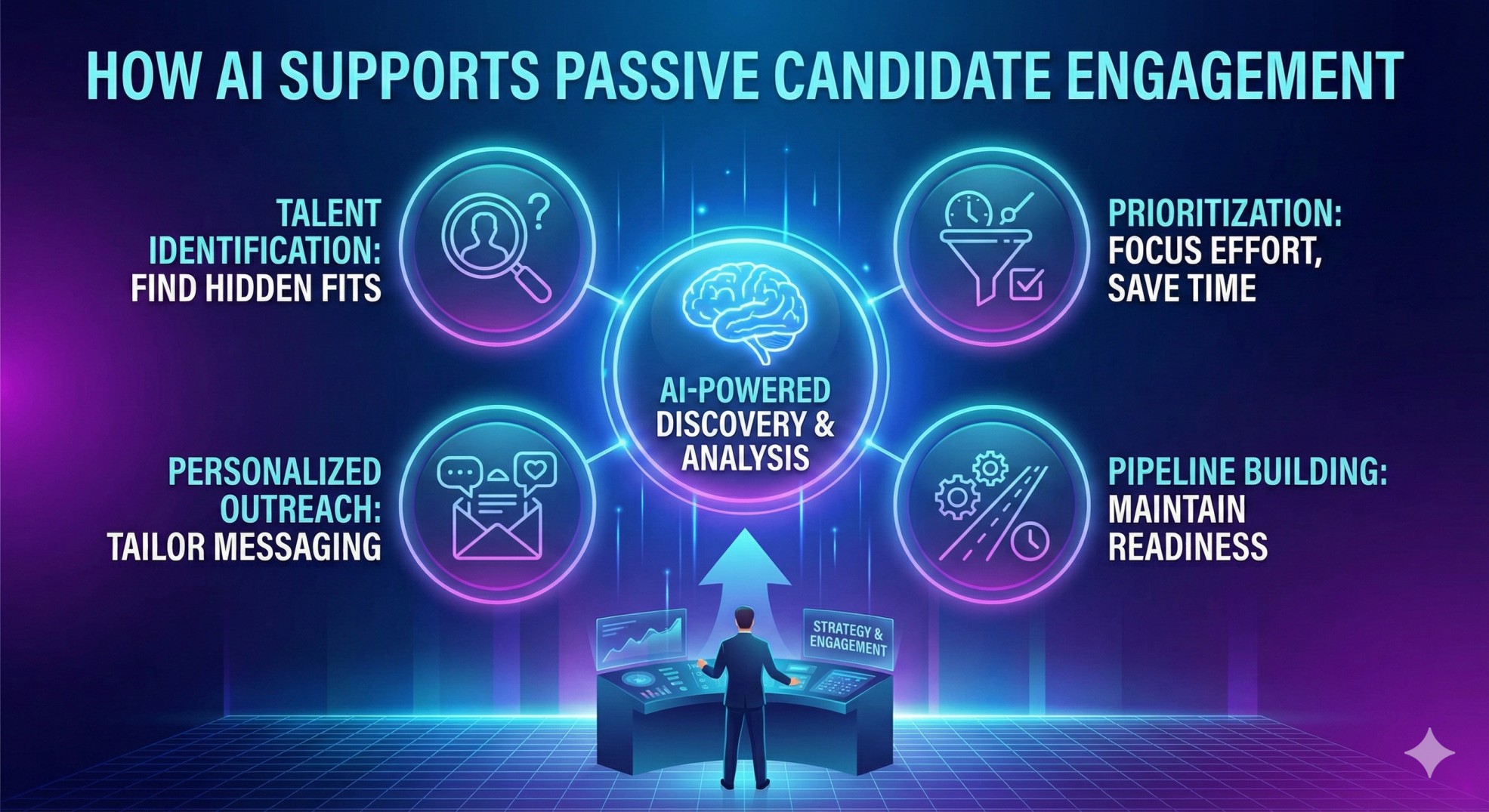
How AI supports passive candidate engagement

Recruiters leveraging AI in passive hiring report consistent benefits:

  • Talent identification: Find candidates who aren’t actively applying but fit the role perfectly.

  • Prioritization: Focus on those most likely to be receptive, saving time and effort.

  • Personalized outreach: AI helps suggest tailored messaging based on candidate profiles and interests.

  • Pipeline building: Maintain relationships over time, ensuring readiness when roles open.

AI handles discovery and analysis, while recruiters focus on strategy and engagement.
From reactive to proactive recruitment

With AI supporting passive talent engagement:
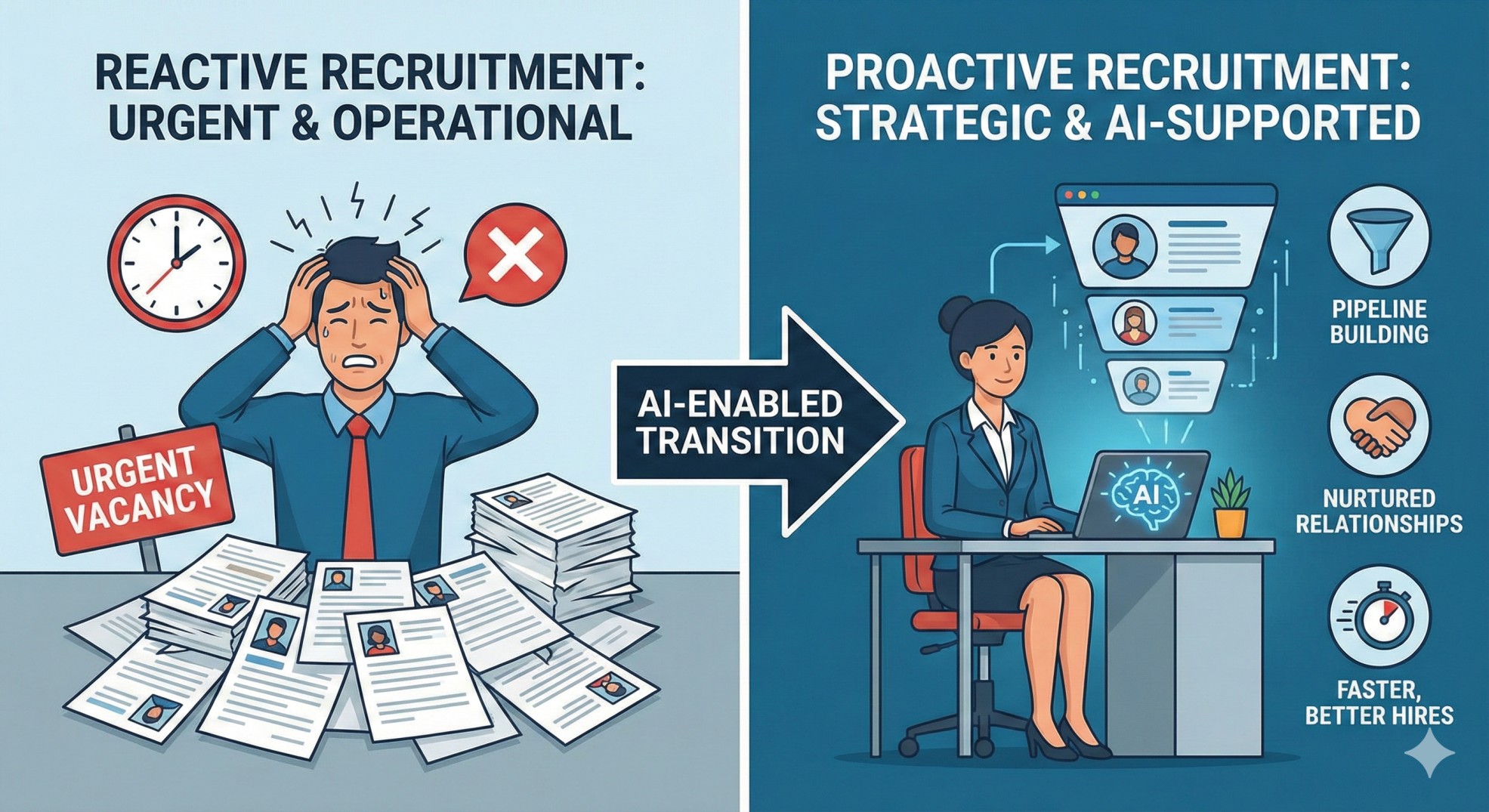
  • Recruiters can build pipelines before vacancies become urgent.

  • Candidate relationships are nurtured over time, improving employer brand perception.

  • Hiring managers receive better-qualified candidates faster.

  • Recruitment becomes strategic, rather than purely operational.

A quiet role for platforms in passive hiring

Platforms like CBREX provide the structure to surface passive talent and track engagement. AI identifies potential candidates and prioritizes outreach, but recruiters remain responsible for building connections, evaluating fit, and guiding the hiring decision.

The takeaway

The best talent isn’t always looking — but with AI, recruiters can find and engage them proactively.

By combining machine-driven insights with human relationship-building, recruitment becomes smarter, faster, and more human — ensuring that top candidates are never missed.

Table of contents

Sign up for regular updates
Get all the news delivered to your inbox.
Thank you! Your submission has been received!
Oops! Something went wrong while submitting the form.

Similar blogs

Read Time :
Global Specialist Agency Network: Fill Hard Roles Faster
When a mid-market Indian company needs to hire a niche biotech regulatory affairs manager in Germany or a fintech compliance lead in Singapore, a single generalist recruiter almost always falls short. This post breaks down why tapping a curated global specialist agency network — where every firm owns deep domain expertise in a specific function and geography — dramatically shortens time-to-fill and surfaces passive talent that job boards never reach. Readers will walk away with a practical framework for evaluating whether their current sourcing model is leaving critical roles unfilled unnecessarily.
Read Time :
Specialist vs. Generalist Recruiting Agency: Which Fills Hard Roles Faster?
Large generalist staffing firms promise breadth; boutique specialists promise depth — but which model delivers results when the role is genuinely hard to fill? This comparison unpacks fill rates, time-to-hire, and candidate quality data across both models, and explains when a specialist recruiting agency network is the decisive advantage.
Read Time :
Pharma Manufacturing Cross-Border Hiring: A 5-Country Playbook
A large Indian pharmaceutical manufacturer needed to simultaneously hire regulatory affairs managers in Germany, QA leads in Singapore, and clinical operations staff in the UAE — all within a single quarter. This case study traces the sourcing approach, agency coordination model, and screening process that made pharma manufacturing cross-border hiring possible at that speed.