Read Time:
3 mins
Breaking the Bias – How a Financial Leader Diversified its Talent Pool


A leading global financial services firm was struggling to meet its diversity and inclusion goals. Despite their best efforts, their talent pipeline remained remarkably similar year after year. Recruiters, pressured by high-stakes deadlines, were unintentionally falling back on "safe" bets—candidates from the same five elite universities or previous "big name" competitors.
The manual screening process was slow and susceptible to unconscious bias. By the time a recruiter finished scanning a resume, they had often already made a mental judgment based on a candidate's name, school, or previous zip code, rather than their actual potential.
To fix this, the firm introduced AI-driven Bias Masking and Competency Mapping. The AI "blinded" identifying information at the top of the funnel and instead ranked candidates based purely on their skills, cognitive abilities, and problem-solving potential.
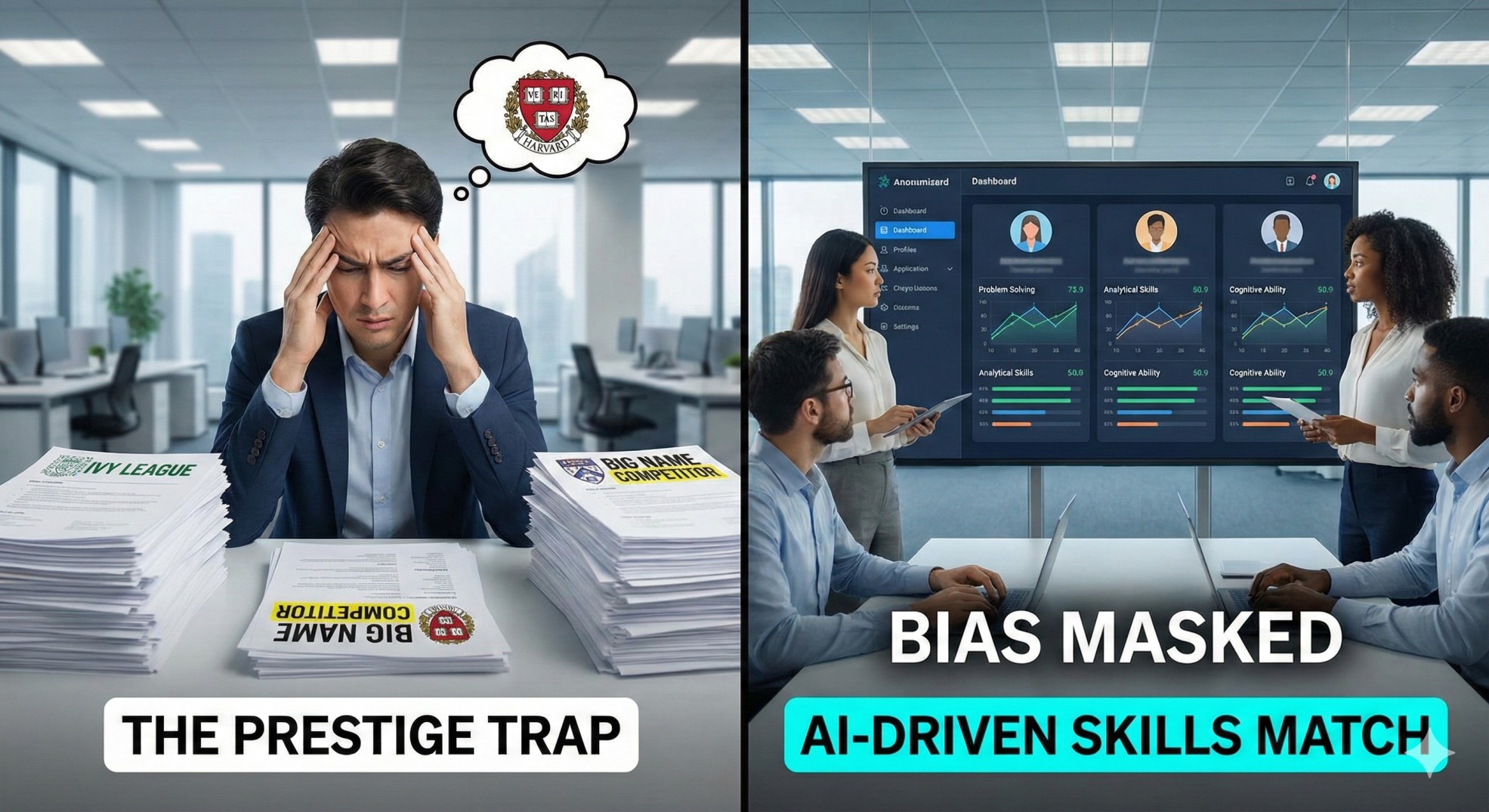
The AI didn't just remove bias; it removed the "guesswork." Recruiters were no longer spending 30% of their week manually auditing pipelines to ensure diversity.
With the objective shortlist provided by AI, recruiters redirected their focus to:
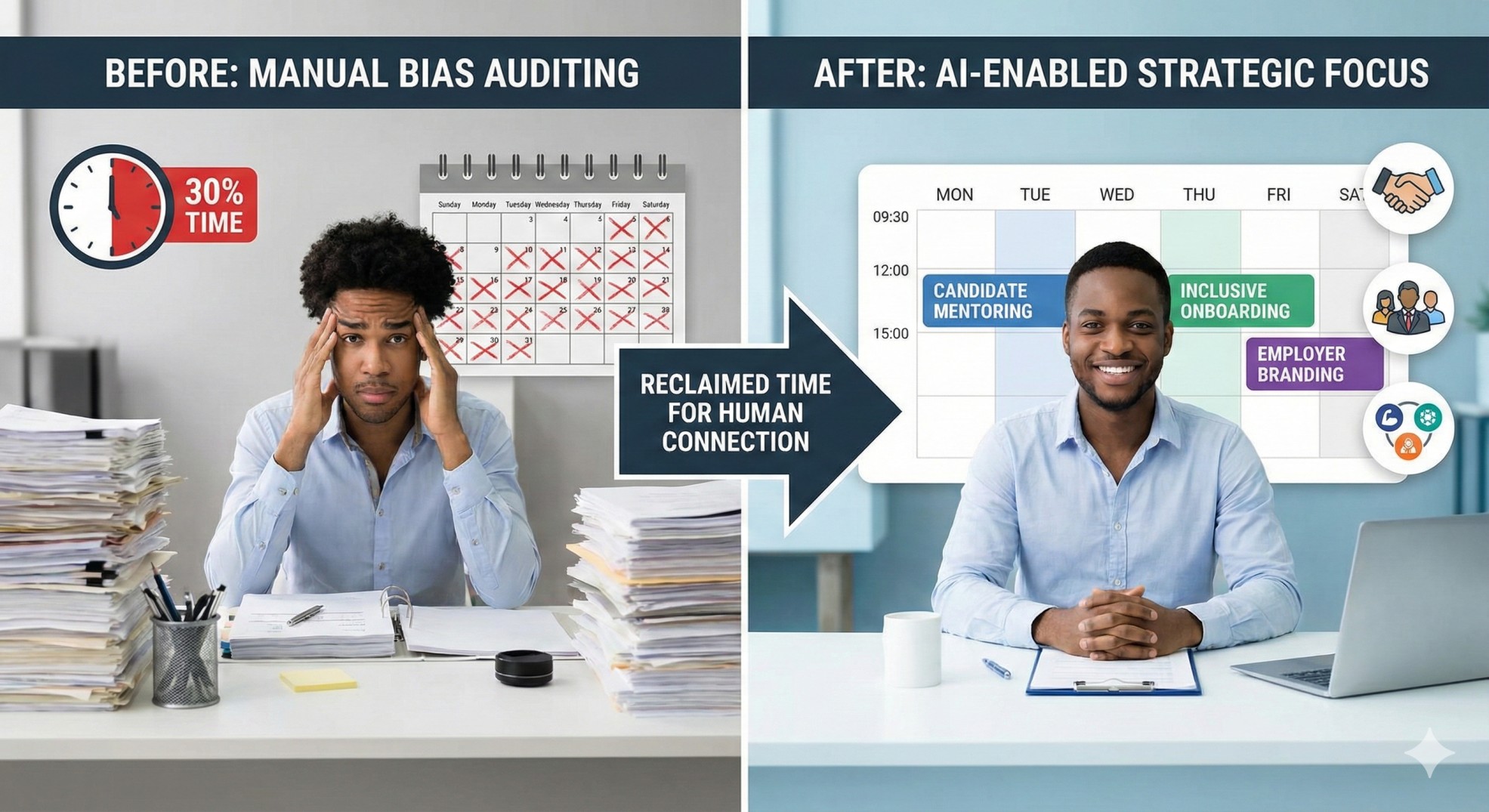
This shift moves the needle from "gut feeling" to data-driven confidence. Platforms like CBREX are instrumental in this evolution—using AI to evaluate candidates based on capability and merit across global markets, ensuring that the human recruiter starts the conversation with the best possible person for the job, regardless of their background.
The financial firm saw a 40% increase in diverse hires in the first year alone. By automating the objective "vetting," they gave their recruiters the freedom to focus on the subjective "humanity" of the hiring process, creating a more equitable and high-performing workplace.


