Hiring in Algeria from India means budgeting eight to twelve weeks for a senior hire, planning around mandatory social security contributions of roughly 26% on top of gross salary, and deciding early whether an Employer of Record (EOR) or a local entity fits your headcount plan. Algeria uses French as its working business language even though Arabic is official, which changes how you brief, interview, and manage candidates from day one.
Key Takeaways
- Language reality: Business is conducted in French far more than English, so job briefs and interviews need French-fluent recruiters or bilingual hiring managers.
- Termination protection is strong: Algeria is not an at-will market, dismissals require documented cause, and severance exposure is real.
- EOR wins under 10 hires: Setting up a local entity (SARL) typically takes 8-12 weeks and meaningful upfront capital, so an EOR is usually cheaper for early-stage headcount.
- Compliance complexity scores 4 out of 5: Monthly CNAS filings, layered social contributions, and limited background-check access add real administrative load.
- Time-to-hire for senior roles runs 8-12 weeks, longer during Ramadan and the July-August summer slowdown.
Algeria Hiring at a Glance
| Factor | Detail |
|---|
| Population / working-age | Approximately 46 million total; working-age (15-64) share around 62-65% |
| Official / business language | Arabic (official), French (dominant business language), limited English |
| Top hiring cities | Algiers, Oran, Constantine, Annaba |
| Currency | Algerian Dinar (DZD); 1 DZD ≈ INR 0.62 (approximate, verify live rate) |
| Time zone gap from IST | Algeria is approximately 3.5 to 4.5 hours behind IST depending on the season |
| Employer social security contribution | Approximately 26% of gross salary |
| Typical senior hire timeline | 8-12 weeks |
| Compliance complexity score | 4 out of 5 |
Algeria Hiring Snapshot
Algeria is Africa's largest country by land area and one of North Africa's biggest economies, anchored by energy exports but increasingly diversifying into manufacturing, telecom, and pharma. For an Indian company scoping its first hire there, a few facts shape almost every decision that follows.
- Population and workforce: Roughly 46 million people, with a working-age population large enough to support skilled hiring in engineering, finance, and operations, though youth unemployment remains a structural issue.
- Language: Arabic is the official language, but French is the language of business, contracts, and most white-collar workplaces. Job postings and offer letters in English alone will underperform. Build in a French-speaking point of contact from the first job brief.
- Top hiring cities: Algiers (finance, corporate, government-adjacent roles), Oran (industrial, port logistics), Constantine (manufacturing), and Annaba (steel, heavy industry).
- Currency: The Algerian Dinar (DZD) trades at approximately INR 0.62 per dinar, though currency controls mean repatriating profits or paying cross-border invoices needs local banking guidance.
- Time zone: Algeria sits roughly 3.5 to 4.5 hours behind IST, which leaves a workable overlap window in the Indian afternoon for interviews and standups.
Employment Law Essentials for Foreign Employers
Algeria's labor code leans firmly toward employee protection, and Indian employers used to more flexible domestic contracts often underestimate this. A few essentials to build into every offer:
- Probation periods: Typically range from 3 months for standard staff up to 6-12 months for managerial and executive roles, and must be stated explicitly in the contract.
- Notice periods: Legal minimums usually sit around 1 month for staff and up to 2-3 months for senior management, though market practice for country manager-level hires often runs longer given the difficulty of replacing them.
- Mandatory benefits: Statutory paid leave (typically 30 calendar days annually), mandatory social security registration (CNAS), and a market-standard practice of a 13th-month payment, even where not strictly mandated by law.
- Fixed-term contracts: Algeria restricts the use of fixed-term contracts to specific, justified circumstances (seasonal work, replacement of an absent employee, or a defined project). Using fixed-term contracts as a workaround for permanent roles carries real legal risk.
- At-will employment: Does not exist. Termination requires documented cause, a formal process, and in many cases severance payment tied to tenure. Budget for this from day one rather than treating it as a contingency.
Getting this wrong is one of the more expensive mistakes in cross-border hiring compliance for Indian companies, and Algeria's protections are stricter than several other markets in the region.
EOR vs Own Entity in Algeria
The entity-versus-EOR decision usually comes down to how many people you plan to hire and over what horizon. Setting up a SARL (the standard Algerian limited liability structure) typically takes 8-12 weeks, requires minimum share capital, a local legal representative, and ongoing corporate tax and audit obligations regardless of headcount.
An Employer of Record sidesteps that entirely. The EOR becomes the legal employer on paper, handles payroll, CNAS registration, and statutory filings, while your team manages the person day to day. For most Indian mid-market companies making their first Algeria hire, this is the pragmatic starting point.
- EOR generally wins when: you're hiring fewer than 10 people, testing market fit within a 12-month window, or need to be operational within weeks rather than a quarter.
- Own entity makes sense when: you're planning 15+ hires, need to sign local commercial contracts under your own name, or are establishing a manufacturing or distribution presence that requires a registered local entity anyway.
- Misclassification risk: Some companies try to treat Algerian hires as independent contractors to avoid entity or EOR costs. Algerian labor inspectors apply a substance-over-form test, and a contractor who works exclusive hours, uses company equipment, and reports to a manager will likely be reclassified as an employee, triggering back-payment of social contributions and penalties.

Salary Benchmarks by Role
Salary data for Algeria is thinner than for Gulf or European markets, so treat the figures below as directional ranges rather than fixed benchmarks. Expect regional variation, with Algiers commanding a premium over Oran or Constantine.
| Role | Monthly Gross (DZD) | Approx Monthly INR | Notes |
|---|
| Mid-level Engineer | 120,000-220,000 | ~74,000-136,000 | Higher for oil & gas, telecom, or automation skills |
| Sales Manager | 150,000-280,000 | ~93,000-174,000 | Commission structures less common than in India |
| Operations Manager | 180,000-320,000 | ~112,000-198,000 | Manufacturing and logistics roles trend higher |
| Finance Manager | 200,000-350,000 | ~124,000-217,000 | CPA/DFCG-equivalent credentials command a premium |
| Country Manager | 400,000-750,000+ | ~248,000-465,000+ | Wide range depending on sector and P&L scope |
Net pay is meaningfully lower than gross once employee-side social contributions (roughly 9%) and progressive income tax are deducted, so candidates evaluate offers on net take-home, not headline gross. Equity compensation is rare outside multinational subsidiaries; Algerian candidates generally prioritize cash compensation, job security, and a clear 13th-month bonus over stock options.
Hiring Timeline
Plan for 8-12 weeks to close a senior hire in Algeria, longer if the role requires niche technical skills or executive-level sign-off. A few timeline realities to build into your plan:
- Notice period reality: Even where legal minimums are shorter, senior candidates in good standing with their current employer often serve 1-3 months of notice, and rushing this can damage your employer reputation locally.
- Background checks: Formal, centralized background verification is less standardized than in India or the Gulf. Expect checks to rely more on reference calls and document verification, adding 1-2 weeks versus a fully digitized market.
- Seasonal slowdowns: Ramadan (dates shift yearly on the lunar calendar) slows hiring activity noticeably, as does the July-August summer period when many professionals take extended leave. Avoid launching a critical search in either window if you can help it.
If your current hiring cycles are consistently missing these windows, it's worth reading why your time-to-fill is running long before assuming Algeria is uniquely slow. Often it's a sourcing and vendor-coordination problem, not a market problem.
Talent Pool Reality Check
Algeria's talent depth is strongest in engineering, oil and gas, telecom, and increasingly in IT and fintech as the government pushes digital economy initiatives. Youth unemployment remains elevated, which means there is a real supply of ambitious, educated early-career talent, but experienced mid-to-senior professionals in specialized functions are in tighter supply and get competed for hard.
- Competition: State-owned energy companies (like Sonatrach) and multinational operators pay well and offer stability, making it harder for a new foreign entrant to win senior talent on brand alone.
- Skill depth: Strong in mechanical, electrical, and process engineering; growing but thinner in software engineering, data, and product roles compared to Gulf or Southeast Asian markets.
- Indian diaspora angle: Unlike the UAE or Southeast Asia, Algeria has a very limited Indian diaspora presence. Don't expect a ready-made bridge of Indian expats or India-educated locals to ease cultural onboarding, budget extra time for cultural orientation instead.
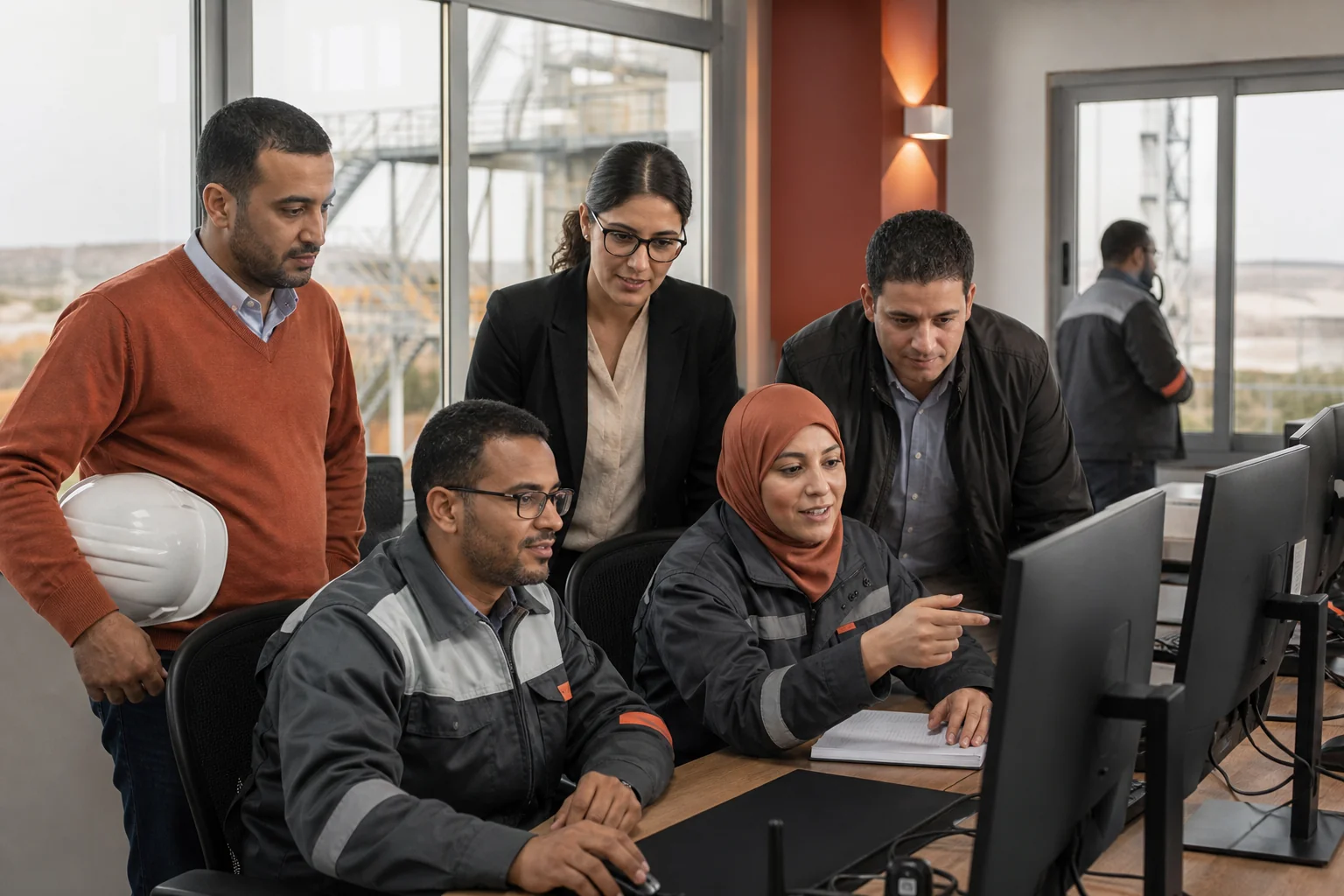
Cultural & Interview Norms
Algerian professional culture is formal and relationship-driven. Candidates expect a structured interview process with clear next steps communicated promptly, and they read slow or vague follow-up as a sign the employer isn't serious.
- Communication style: Formal titles and respectful, French-inflected business etiquette matter, particularly with senior candidates. A too-casual approach can read as disorganized rather than friendly.
- Interview format: In-person or video interviews with a clear panel structure are preferred over informal chats. Building in a technical assessment plus a values/fit conversation is standard practice.
- Response to Indian management: Algerian professionals generally respond well to clear hierarchy and defined decision rights, but expect transparency on compensation, contract terms, and growth path early, not left for a final-stage surprise.
- Drop-off red flags: A sudden slowdown in WhatsApp or email responsiveness near offer stage, or unexplained no-shows for a final interview, usually signals a competing offer from a state-owned or multinational employer. Move fast once you've decided.
Compliance & Payroll Complexity Score
Algeria scores a 4 out of 5 on payroll and compliance complexity for a foreign employer, on the higher end even compared to other emerging markets Indian companies hire in.
- Tax: Progressive personal income tax combined with corporate tax obligations for any local entity, requiring a local accountant or EOR payroll partner familiar with Algerian filing cycles.
- Social security / pension: Mandatory CNAS registration with employer contributions around 26% and employee contributions around 9%, layered with separate retirement and unemployment fund allocations.
- Payroll cycle: Monthly payroll with CNAS declarations due on a strict monthly schedule; late filings attract penalties.
- Data privacy: Algeria has data protection rules governing employee personal data that require careful handling of background-check information and cross-border data transfer to an Indian HQ system.
- Background-check limits: Formal criminal record checks are more restricted for foreign employers to access directly, often requiring the candidate's own participation in obtaining documentation.
Companies managing this alongside hires in five or six other countries often end up buried in mismatched vendor contracts. That's the exact problem covered in what vendor sprawl really costs in recruitment.
How CBREX Hires in Algeria
CBREX doesn't run a single in-house recruiting team trying to cover every country from one office. It routes each mandate to the most relevant specialist firm from a network of 4,000+ specialist recruiting firms across 33 countries, matched by CBREX's AI to the specific function, seniority, and market you're hiring in.
Across the platform, CBREX has delivered 6,500+ global hires, with an average fulfillment time of 17 days and a 98% shortlist ratio, meaning the candidates that reach your desk have already cleared agency pre-screening and AI validation before you spend a single hour interviewing. The model is strictly pay-on-hire: no retainers, no seat licences, no upfront fees, and everything runs under one contract rather than a separate agreement per country or per agency.
CBREX's network is particularly strong in Healthcare/Pharma, IT, and Manufacturing, three sectors where Indian mid-market companies most frequently need specialist hires outside India. Rather than briefing a generalist staffing firm that has never placed a French-speaking finance manager in Algiers, CBREX's AI vendor matching routes your mandate to a firm that already understands that specific talent pool. You can see how this matching engine works in more depth in how to choose a talent marketplace for 2026.
Common Mistakes Indian Companies Make Hiring in Algeria
- Assuming English gets you through: Job descriptions, offer letters, and even day-to-day management communication need French. Candidates read English-only outreach as a sign the employer hasn't done its homework.
- Underestimating termination protections: Treating an Algerian hire like an India-style employment-at-will arrangement leads to costly disputes down the line. Budget for severance from the start.
- Ignoring CNAS registration timelines: Delaying social security registration to "sort out later" creates compliance exposure that compounds monthly.
- Treating Algeria like other North African or MENA markets: Morocco, Egypt, and Algeria have distinct labor codes, languages, and talent pools. A playbook built for one rarely transfers cleanly.
- Relying on a single generalist agency: A domestic staffing partner with no Algeria-specific network typically resubmits the same handful of resumes. This is the exact failure pattern covered in recruitment marketplace vs staffing agency comparisons.
Cost to Hire — Full Picture
The quoted salary is never the full cost. For an accurate total cost to hire in Algeria, add these layers on top of gross compensation:
- Employer social security contribution: Approximately 26% of gross salary, covering CNAS, retirement, and unemployment funds.
- Recruiter or EOR fee: Specialist agency placement fees typically run 15-25% of annual CTC for professional and managerial roles; EOR management fees are usually a flat monthly fee per employee rather than a percentage.
- Severance exposure: Tenure-linked severance obligations apply on termination without cause, and should be modeled as a contingent liability, not an edge case.
- Hidden costs: Work permits for any expatriate staff, relocation support if you're bringing in an Indian manager to set up local operations, the market-standard 13th-month payment, and ongoing EOR or entity administrative fees.
Companies that only budget the headline salary consistently underestimate true cost to hire by 30-45%. If you want a clearer breakdown of where these hidden layers show up across different markets, how much niche skill hiring really costs walks through the components in more detail, and CBREX's hidden hiring tax calculator can help you model the real number for your specific role.
Quick-Start Checklist for Algeria
Use this sequence before you open a requisition for an Algeria hire:
- Decide EOR vs entity based on your 12-month headcount plan for the country.
- Draft the job brief in French, or confirm your recruiting partner will localize it.
- Confirm CNAS registration and payroll partner before the first offer goes out.
- Set salary bands using net take-home as the anchor, not gross.
- Build in an 8-12 week timeline, and avoid launching during Ramadan or the summer slowdown.
- Brief your recruiting partner on Algeria-specific termination and probation rules before contracts are drafted.
- Model total cost to hire including the ~26% employer social contribution and any relocation or permit costs.
- Choose a recruiting partner with an actual Algeria or North Africa network, not a generalist agency extending into a new market for the first time.
- Track candidate responsiveness near offer stage as an early signal of competing offers.
- Centralize the mandate under one contract if you're hiring in Algeria alongside other markets, to avoid the vendor sprawl covered in hidden costs of managing multiple recruitment agencies.

Algeria rewards employers who respect its labor protections, invest in French-language recruiting, and move decisively once a strong candidate is identified. Getting the compliance and sourcing pieces wrong is expensive; getting them right, with a partner who already has the right specialist agencies on tap, is straightforward. Start hiring in Algeria with a team that has already built the network, screening, and single-contract infrastructure for exactly this kind of multi-geo mandate: book a demo with a CBREX specialist and get your first Algeria mandate moving this week. If you'd rather run the numbers first, calculate your hidden hiring tax, or let's talk about your specific role and timeline.