Read Time:
19 Mins
Hiring in the Netherlands for Indian Companies: The 2026 Handbook


The Netherlands headcount just got approved. Your hiring manager in Amsterdam is ready to move. Then the real questions start landing on your desk in Bengaluru: What is the notice period? Do we need a Dutch entity? What does a mid-level engineer actually cost — in euros and rupees? And why did the last candidate drop out after the second interview?
Dutch hiring is not complicated once you know the rules. But the rules are specific, the talent market is tight, and the compliance traps are real. This handbook covers everything an Indian company needs to know to hire in the Netherlands in 2026 — employment law, EOR versus entity, salary benchmarks, compliance scoring, and how to source specialist talent without starting from scratch.
Before briefing a single agency, get these fundamentals right. Here is the at-a-glance picture for 2026.
| Population | Approximately 17.9 million; working-age population (~15–64) approximately 11.5 million |
| Official language | Dutch |
| Business language | English, the Netherlands ranks #1 globally in the EF English Proficiency Index. Most professionals in Amsterdam, Rotterdam, and Eindhoven work comfortably in English. |
| Top hiring cities | Amsterdam (tech, finance, media), Rotterdam (logistics, supply chain, energy), The Hague (government, legal, international orgs), Eindhoven (high-tech manufacturing, semiconductors), Utrecht (life sciences, healthcare) |
| Currency | Euro (EUR). Approximately ₹92, 95 per EUR (mid-2026 indicative rate, verify before budgeting) |
| Time-zone gap from IST | IST (UTC+5:30) vs CET (UTC+1) in winter = 4.5-hour gap. In summer CEST (UTC+2) = 3.5-hour gap. Morning overlap is workable; afternoon sync is easier than US or LATAM markets. |
| EU membership | Yes, EU nationals work freely; non-EU nationals (including Indian passport holders) require a work permit |
The Netherlands punches well above its size as a hiring market. It hosts European headquarters for hundreds of multinationals, ASML, Philips, Shell, ING, Booking.com, which means the talent pool is internationally experienced and English-fluent. That is good news for Indian companies. The flip side: competition for that same talent is fierce.
Dutch employment law is employee-friendly. That is not a warning, it is a fact to build your HR policy around before you make your first offer.
Probation is capped by law. For fixed-term contracts of up to two years, the maximum probation period is one month. For permanent (indefinite) contracts, the maximum is two months. Any probation clause that exceeds these limits is legally void, the employee can challenge it.
The legal minimum notice period for employers scales with tenure: one month for up to five years of service, two months for five to ten years, three months for ten to fifteen years, and four months beyond that. In practice, most professional roles carry a one-to-three-month notice period written into the contract. Senior hires often have three months on both sides. Factor this into your hiring timeline.
The Netherlands operates a "chain rule" (ketenregeling): a maximum of three consecutive fixed-term contracts over a period of three years. Once either limit is crossed, the contract automatically becomes permanent. There is no workaround, attempting to break the chain with a short gap requires at least six months between contracts.
No. The Netherlands has no at-will employment. Dismissal requires either mutual agreement (vaststellingsovereenkomst), approval from the UWV (Employee Insurance Agency) for economic reasons, or a court order. Wrongful dismissal claims are common and expensive. Build this into your risk model from day one.
Once your Dutch headcount reaches 50 employees, you are legally required to establish a works council. The council has consultation and co-determination rights on certain HR decisions. This is not a blocker for most Indian companies entering the market, but it is worth knowing before you scale.
This is the first structural decision every Indian company faces when hiring in the Netherlands. Get it wrong and you either overspend on entity setup or expose yourself to misclassification risk.
A BV is the Dutch equivalent of a private limited company. Setup typically takes four to eight weeks and costs approximately €2,000–€5,000 in notary and legal fees, plus ongoing compliance costs (accounting, payroll administration, annual filings). You will also need a Dutch bank account, a registered address, and a local director in some cases. The total first-year cost of maintaining a BV, before you pay a single employee, can run to €10,000–€20,000 depending on your service providers.
An Employer of Record (EOR) legally employs your Dutch hires on your behalf, handling payroll, tax, and compliance. EOR makes sense when:
EOR providers typically charge 15-25% on top of gross salary. At scale (10+ hires), the math usually tips toward a BV.
The Dutch tax authority (Belastingdienst) enforces the Wet DBA (Wet Deregulering Beoordeling Arbeidsrelaties) aggressively. Classifying an employee as a freelancer (ZZP'er) to avoid employer obligations is a known trap. If the working relationship looks like employment, regular hours, single client, no entrepreneurial risk, the Belastingdienst can reclassify it, triggering back-taxes, social security arrears, and penalties. Indian companies used to flexible contractor arrangements should take specific legal advice before engaging Dutch freelancers.
These are approximate gross annual salary ranges for 2026. Gross-to-net conversion in the Netherlands is significant, Dutch income tax is progressive, reaching approximately 49.5% on income above €75,518. Net take-home is roughly 55-65% of gross for most professional salaries. All INR conversions use an indicative rate of ₹93 per EUR, verify before budgeting.
| Role | Gross Annual (EUR) | Approx. INR | Bonus / Variable |
|---|---|---|---|
| Software Engineer (mid-level) | €55,000, €75,000 | ₹51, ₹70 lakh | 5-10% annual bonus; equity at scale-ups |
| Senior Software Engineer / Tech Lead | €75,000, €100,000 | ₹70, ₹93 lakh | 10-15% bonus; RSUs at larger firms |
| Sales Manager | €60,000, €85,000 base | ₹56, ₹79 lakh | OTE typically 130-150% of base |
| Operations Manager | €55,000, €75,000 | ₹51, ₹70 lakh | 5-10% performance bonus |
| Finance Manager | €65,000, €90,000 | ₹60, ₹84 lakh | 5-12% bonus; profit-share at some firms |
| Country Manager / General Manager | €90,000, €140,000 | ₹84, ₹130 lakh | 15-25% bonus; LTI common |
Important: All figures above are base salary only. Add 8% vakantiegeld (holiday allowance) on top of every gross figure, this is a statutory cost, not a discretionary benefit. Employer social security contributions add a further 18-22% on top of gross. See Section 11 for the full cost-to-hire picture.
The 30% ruling (30%-regeling) is worth knowing: highly skilled migrants recruited from abroad may qualify for a tax-free allowance of 30% of their gross salary for up to five years. This makes the Netherlands more attractive to international talent and can be a genuine recruitment lever, but it requires the employee to meet specific salary thresholds and the employer to apply through the Belastingdienst.
Dutch hiring moves at a measured pace. Candidates expect a structured process, and rushing it signals disorganisation. Here is a realistic timeline for a senior hire in 2026.
Work permits for non-EU nationals: If you are hiring an Indian national or any non-EU candidate into the Netherlands, the kennismigrant (highly skilled migrant) permit is the most common route. IND (Immigration and Naturalisation Service) processing typically takes two to five weeks once the employer is recognised as a sponsor. Factor this into your timeline, it runs in parallel with the hiring process but requires the employer to be pre-registered.
Peak hiring seasons: January, May and September, October. Avoid launching searches in July, August (Dutch summer holidays, when response rates drop sharply) or late December.
For context on why slow hiring is expensive regardless of market, see Time to Hire: The Hidden Cost of Roles Left Open.
The Netherlands has one of the tightest labour markets in Europe. The unemployment rate sits at approximately 3.7%, effectively full employment. That means most of the talent you want is already employed, probably happy, and not actively looking.
You are not just competing with Dutch employers. FAANG companies, ASML, Philips, Shell, ING, and a dense ecosystem of well-funded European scale-ups all recruit aggressively in the same cities. For tech and engineering roles especially, expect counter-offers and short decision windows.
Approximately 250,000 people of Indian origin live in the Netherlands, a meaningful community concentrated in Amsterdam, Rotterdam, and The Hague. This diaspora can be a useful bridge: bilingual professionals who understand both Indian corporate culture and Dutch workplace norms. They are not a shortcut to hiring, but they are worth including in your sourcing strategy for roles that require cross-cultural fluency.
The language barrier is minimal. The Netherlands consistently ranks first globally in the EF English Proficiency Index. You can run your entire hiring process, job postings, interviews, onboarding, in English without losing candidates.

Dutch workplace culture has specific characteristics that catch Indian hiring teams off guard. Understanding them before you start interviewing will save you candidates.
Dutch professionals are famously direct. They will tell you the job description is unclear, the salary is below market, or the interview process is too long, and they will do it politely but without softening. This is not rudeness; it is a cultural norm. Treat direct feedback as useful signal, not as a red flag.
The Netherlands has one of the lowest power-distance scores in Hofstede's cultural dimensions research. Candidates expect autonomy, dislike micromanagement, and will ask pointed questions about decision-making authority in interviews. If your management structure is heavily hierarchical or approval-chain-heavy, be prepared to address this directly, or lose candidates at the offer stage.
Two to three rounds is the norm. Panel interviews are common for senior roles. Case studies or practical assignments are standard in consulting, finance, and product roles. Expect candidates to ask about team structure, work-life balance, and remote work policy in the first interview, these are not negotiating tactics, they are genuine decision criteria.
The Netherlands has a strong part-time work culture, approximately 50% of the workforce works part-time, the highest rate in the EU. Full-time roles are typically 32-40 hours. Candidates will notice if your job description implies 50-hour weeks, and many will self-select out. Be explicit about working hours and flexibility in your job postings.
The fastest ways to lose Dutch candidates mid-process:
For Indian companies hiring internationally, understanding compliance complexity upfront prevents expensive surprises. Here is the Netherlands scorecard.
| Dimension | Score (1, 5) | Notes |
|---|---|---|
| Income Tax Complexity | 4 / 5 | Progressive rates up to 49.5%; loonheffing (wage tax) withheld by employer monthly; 30% ruling adds complexity but is a benefit |
| Social Security / Pension | 4 / 5 | Employer contributions ~18-22% of gross; covers AOW (state pension), WW (unemployment), WIA (disability); sector-specific pension funds (bedrijfstakpensioenfonds) may apply |
| Payroll Administration | 3 / 5 | Monthly cycle is standard; vakantiegeld accrual must be tracked; payroll software must be Dutch-compliant; annual payroll tax return required |
| Data Privacy (GDPR) | 4 / 5 | GDPR applies fully; Dutch DPA (Autoriteit Persoonsgegevens) is active; strict rules on candidate data retention, background check scope, and cross-border data transfers to India |
| Background Check Limits | 3 / 5 | VOG (Certificate of Good Conduct) is standard and employer-requested; credit checks are restricted; medical checks heavily regulated; reference checks are common but must be proportionate |
Overall Compliance Complexity: 3.5 / 5 (Moderate-High)
The Netherlands is not the most complex market in Europe, Germany and France score higher, but it is significantly more complex than most markets Indian companies hire in outside the EU. The combination of strong employee protections, GDPR enforcement, and sector-specific pension obligations means you need either a specialist Dutch payroll provider or an EOR from day one. Do not attempt to run Dutch payroll through your India-based finance team without local support.
For a broader view of how global hiring compliance compares across markets, the Global Hiring from India: The 2026 Complete Guide covers the full framework.
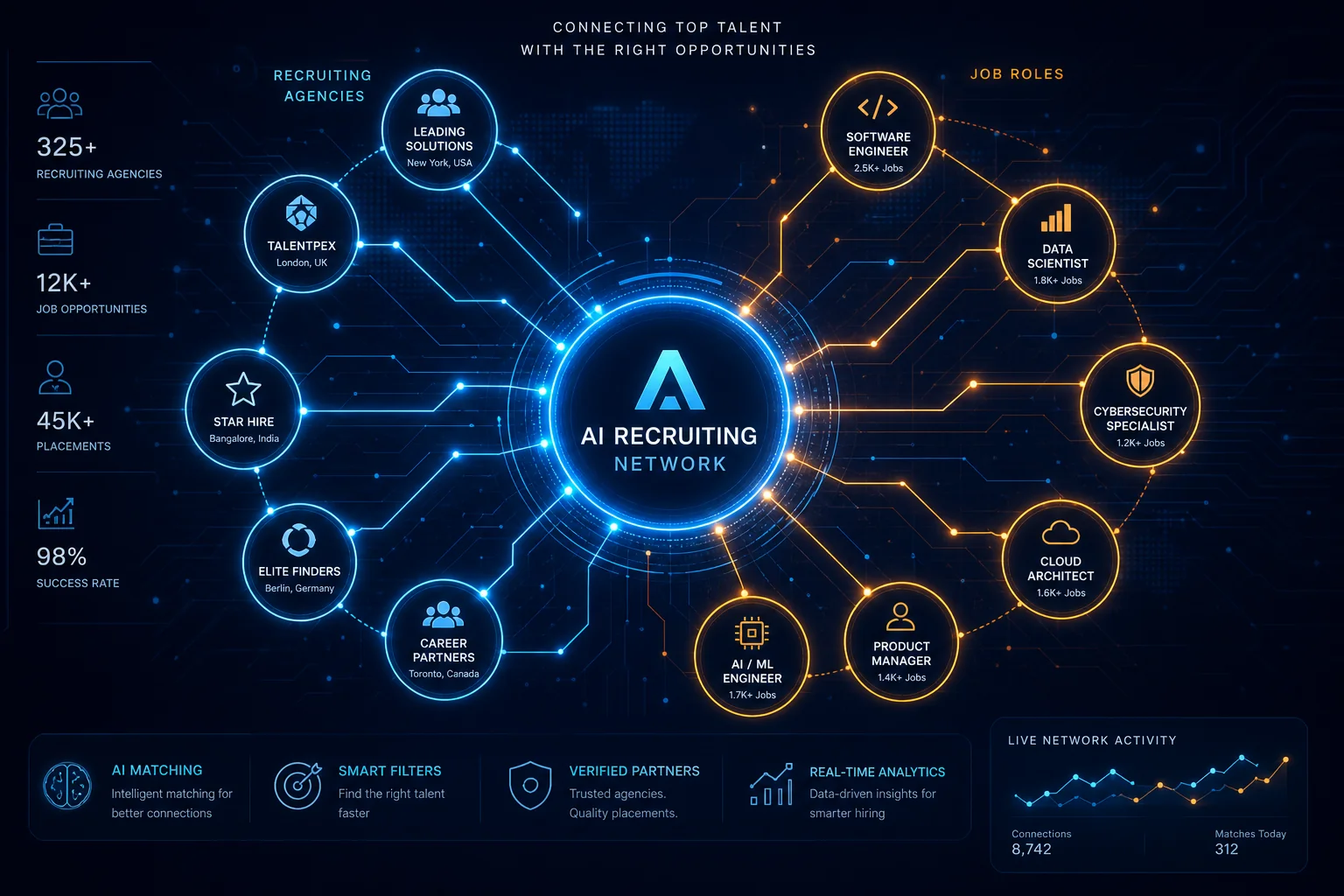
Most Indian companies trying to hire in the Netherlands face the same sourcing problem: their existing agency relationships are India-focused, their job boards reach active job seekers only, and the Dutch passive talent market, where the best candidates actually sit, is invisible to them.
CBREX solves this through a network of 4,000+ specialist recruiting firms across 33 countries, accessed through a single contract and a single invoice. Here is what that means in practice for Netherlands hiring.
CBREX has particular depth in Healthcare, Pharma, IT, and Manufacturing, sectors that align directly with the Netherlands' strongest talent clusters in Utrecht, Eindhoven, and Rotterdam.
If you are managing multiple country hires simultaneously, Netherlands alongside Germany, Singapore, or the UAE, the single-contract model eliminates the administrative chaos that comes with running separate agency relationships in each market. See how this works across geographies in the How to Hire in Southeast Asia from India (2026) guide.
To see how CBREX compares to traditional agency models on cost and speed, Recruitment Marketplace vs Staffing Agency: India 2026 breaks down the numbers.
These are the errors that show up repeatedly when Indian mid-market companies enter the Dutch market for the first time.
The gross salary is only the starting point. Here is the full employer cost stack for a Netherlands hire in 2026.
| Cost Component | Approximate Amount | Notes |
|---|---|---|
| Gross salary | 100% (baseline) | Starting point for all calculations |
| Employer social security contributions | +18-22% of gross | AOW, WW, WIA, ZVW (health insurance contribution); exact rate varies by sector and salary level |
| Holiday allowance (vakantiegeld) | +8% of gross | Statutory; paid annually in May/June |
| Recruiter fee (if using agency) | 15-20% of first-year gross salary | One-time placement fee; CBREX operates on pay-on-hire basis |
| Severance (transition payment) | 1/3 month salary per year of service | Applies if employer initiates dismissal; accrues from day one |
| Work permit (kennismigrant) | €350–€500 per application | For non-EU nationals; employer must be IND-recognised sponsor |
| Relocation allowance | €3,000–€8,000 (market norm) | Not legally required but expected for international hires; partially tax-exempt |
| 13th month | Varies by sector | Not legally mandatory but common in finance, manufacturing, and some CAO (collective labour agreement) sectors |
| Total employment cost | ~130-145% of gross salary | Excluding one-time recruitment and relocation costs |
For a mid-level software engineer at €65,000 gross, the total annual employment cost to the company is approximately €85,000–€95,000 (~₹79, 88 lakh) before recruitment fees. Add a 17% placement fee and first-year total cost of hire reaches approximately €96,000–€107,000 (~₹89, 100 lakh).
Understanding the full cost picture before you start hiring prevents budget surprises mid-process. For a deeper look at how recruitment fees compound across multiple hires, Recruitment Agency Cost in India: What You're Really Paying provides a useful framework, the same principles apply to international placements.
Use this checklist before you brief your first agency or post your first Dutch job description.
The Netherlands is a high-quality, high-cost, high-compliance hiring market. Companies that enter with accurate benchmarks, compliant contracts, and specialist sourcing partners fill roles faster and retain talent longer. Companies that treat it like a simpler market pay for the assumption.
The talent you need in Amsterdam, Rotterdam, or Eindhoven is not browsing job boards. They are employed, performing well, and only open to the right conversation from the right source. Reaching them requires specialist agencies with genuine Dutch market depth, not a generalist firm recycling active candidates.
CBREX connects Indian companies to 4,000+ specialist recruiting firms across 33 countries through a single contract, with a pay-on-hire model that means you only pay when a hire is made. No retainers. No upfront fees. No vendor management overhead. With a 17-day average fulfillment time and a 98% shortlist ratio, it is the fastest way for an Indian company to build a qualified Netherlands shortlist without building a local agency network from scratch.
If you are ready to move on a Netherlands hire, or want to understand exactly what sourcing specialist talent there will cost and take, book a demo with a CBREX specialist. Bring your role brief and we will show you which agencies in our network have the deepest track record for that function in the Netherlands.
Prefer to explore the platform first? Sign up on CBREX and post your first Netherlands role today. Or if you have a specific hiring challenge you want to talk through directly, reach out to our team, we respond fast.


