Read Time:
18 Mins
Recruitment Marketplace vs Staffing Agency: India 2026


Your TA team has just been handed approval for eight hires across three countries. Two are senior leadership roles in the UAE. Three are specialist tech positions in Poland. The remaining three are back home in Bengaluru. You open your agency contact list. Fourteen firms. None of them cover all three markets. None of them talk to each other. And every single one has a different fee structure.
This is the moment where the choice between a recruitment marketplace and a traditional staffing agency stops being theoretical. For TA leaders at Indian mid-market and enterprise companies in 2026, it is one of the most consequential decisions in the hiring calendar — and most teams make it by default, not by design.
This post breaks down both models across the dimensions that actually matter: cost structure, speed of fulfillment, niche role coverage, vendor management overhead, and scalability for multi-country hiring. By the end, you will have a clear framework for deciding which model fits your company's current growth stage and hiring complexity.
A traditional staffing agency is a firm that sources, screens, and presents candidates to employers in exchange for a fee. That fee typically takes one of two forms: a retainer (paid upfront before any work begins) or a contingency fee (paid only when a hire is made, usually 12–20% of the candidate's first-year salary).
Most agencies maintain their own candidate database, built over years of placements and inbound applications. When you brief them on a role, they search that database first, then reach out to their network. The quality of that network varies enormously, a strong specialist agency in a specific vertical can be genuinely excellent; a generalist agency briefed on a niche role will often send you whoever is available, not whoever is right.
The core constraint of a traditional staffing agency is geography and specialisation. Most agencies are strong in one market, one function, or one industry. A Bengaluru-based IT staffing firm may be excellent for Java developers in Karnataka but have no meaningful reach into the German engineering talent pool. When Indian companies expand globally, they typically respond by adding more agencies, one per country, one per function, until the vendor list becomes unmanageable.
For a deeper look at what you're actually paying when you engage a traditional agency, see Recruitment Agency Cost in India: What You're Really Paying.
A recruitment marketplace is a platform that connects employers with a curated network of specialist recruiting firms, routing each role to the agencies best qualified to fill it, rather than relying on a single firm's database. The employer posts a role once. The platform's AI matches that role to the most relevant specialist agencies in its network. Those agencies compete to deliver the best candidates. The employer pays only when a hire is made.
The structural difference is significant. Instead of briefing one agency and hoping their database covers your niche, you are simultaneously activating multiple specialist firms, each with deep expertise in the specific function, industry, or geography your role requires.
CBREX is an AI-powered talent acquisition marketplace that connects companies with a network of 4,000+ specialist recruiting firms across 33 countries through a single platform and a single contract. When a role is posted, CBREX's AI vendor matching tool (C Map) routes it to the most qualified specialist agencies for that specific requirement. Candidates go through a three-level screening process: agency pre-screen, then C Screen AI validation (trained on 250,000+ anonymised resumes across 570+ job categories), then stack ranking, so hiring managers receive interview-ready shortlists, not raw submissions.
The commercial model is straightforward: no retainers, no seat licences, no upfront fees. You pay when you hire. One contract covers every agency in the network, across every country.
This model is particularly relevant for Indian companies that are expanding globally and need to hire in markets like Germany, Singapore, the UAE, Poland, or the Philippines, without building a separate agency relationship in each country. For a broader look at how these platforms compare to job boards and traditional agencies, see Hiring Platforms India: Job Boards vs. Agencies vs. AI Marketplaces.
The choice between a recruitment marketplace and a staffing agency is not binary, it depends on what you are hiring for, where, and at what scale. Here is how the two models compare across the dimensions that TA leaders in India consistently flag as most important.

Traditional staffing agencies charge either a retainer (upfront, non-refundable) or a contingency fee of 12, 20% of first-year salary. Some senior search mandates carry retainers of ₹10, 20 lakh before a single CV is delivered. Recruitment marketplaces operate on a pay-on-hire model, no placement, no fee. This eliminates the financial risk of briefing an agency that ultimately cannot fill the role.
The cost-per-hire on a marketplace is often comparable to a contingency agency fee, but without the retainer exposure. For companies running multiple open roles simultaneously, the aggregate saving on failed retainers can be substantial. See our detailed breakdown in RPO vs Agency India: Which Model Wins for Mid-Market Companies.
A single staffing agency typically takes 2, 4 weeks to deliver an initial shortlist, depending on role complexity and their database depth. If their first shortlist misses the mark, the cycle restarts. A recruitment marketplace activates multiple specialist agencies simultaneously, meaning the first qualified shortlist often arrives faster, and the competitive dynamic between agencies keeps quality high.
CBREX's AI matching layer (C Map) routes roles to the right agencies within hours, not days. The three-level screening process means hiring managers receive pre-validated candidates rather than raw CVs that need manual review. The result is a measurably shorter time-to-hire, particularly for niche or cross-border roles where a single agency would struggle. For context on what slow hiring actually costs, read Time to Hire: The Hidden Cost of Roles Left Open.
This is where the gap between the two models is most pronounced. A single staffing agency, even a strong one, has finite depth. Brief them on a role outside their core specialisation and you will receive candidates from the edges of their database, not the centre of the talent pool.
A recruitment marketplace with 4,000+ specialist agencies across 33 countries can route a regulatory affairs role in Germany to a Munich-based life sciences specialist, a fintech compliance role in Singapore to a Southeast Asia financial services recruiter, and a senior Java architect in Bengaluru to a deep-tech specialist, all from the same platform, on the same day. For companies hiring niche skills across multiple geographies, this is a structural advantage that a single agency cannot replicate.
Managing a panel of 8, 15 agencies across multiple countries means 8, 15 contracts, 8, 15 invoicing relationships, and 8, 15 sets of terms to negotiate and renew. For TA teams without dedicated vendor managers, this administrative load quietly consumes hours every week.
A recruitment marketplace consolidates this into a single contract and unified invoicing. One agreement covers every agency in the network. One invoice per placement. For companies with multi-country hiring needs, this is not a minor convenience, it is a meaningful reduction in compliance risk and finance team overhead. The problem of vendor sprawl is one of the most underestimated costs in enterprise TA, and a marketplace model addresses it structurally rather than procedurally.
A traditional staffing agency scales within its geography. If you need to hire in five countries simultaneously, you need five agencies, or one agency with a global network that charges accordingly. Recruitment marketplaces are built for multi-geo hiring by design. CBREX covers hiring across North America, LATAM, MENA, SEA, EMEA, APAC, Eastern Europe, Western Europe, the UK, China, Japan, and Oceania, all under one contract.
For Indian mid-market companies expanding into markets like Argentina, Germany, the UAE, or Vietnam, this scalability is the difference between a manageable hiring operation and a logistical crisis.
Unscreened CVs are one of the most consistent complaints from hiring managers at Indian enterprises. A traditional agency submits what it has, and without a quality gate, hiring managers end up reviewing 30 CVs to find three worth interviewing. This is not just inefficient; it erodes trust in the recruitment function over time.
CBREX's C Screen AI validates every candidate submission against the role requirements before it reaches the hiring manager. With 98% accuracy across 570+ job categories, the screening layer ensures that what arrives in the hiring manager's inbox is genuinely interview-ready. For a deeper look at how AI screening works in practice, see AI Resume Screening: How to Choose the Right Tool in 2026.
This comparison is not a verdict against staffing agencies. There are specific scenarios where a traditional agency relationship remains the right choice, and recognising them is part of making a good decision.
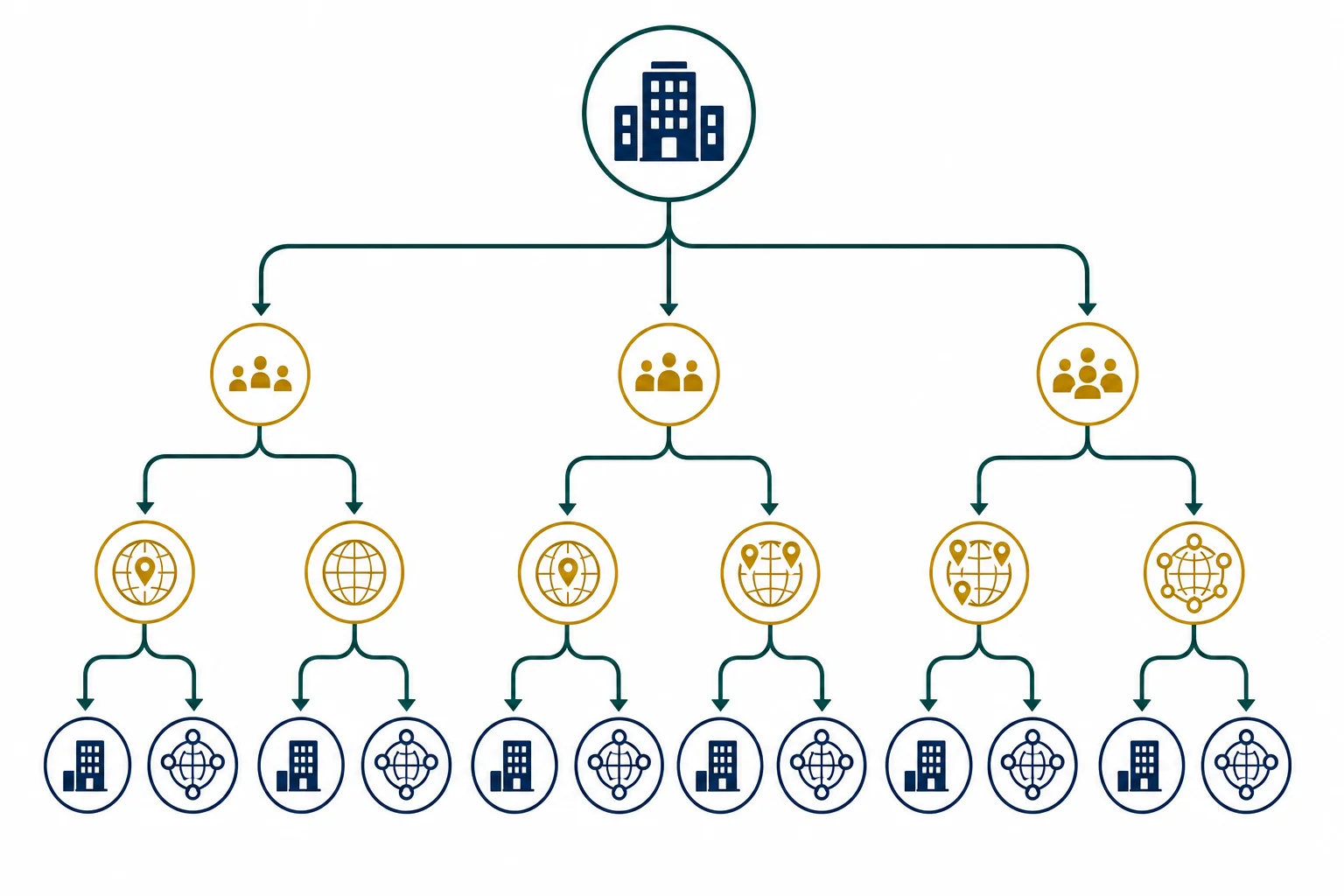
The recruitment marketplace model was built for a specific set of hiring challenges, and those challenges describe the situation of most Indian mid-market and enterprise companies in 2026 with unusual precision.
Indian companies expanding into the UAE, Singapore, Germany, Poland, the Philippines, or any of the 33 countries in CBREX's network face a choice: build a separate agency relationship in each market, or activate a platform that already has specialist agencies in place. The single-contract model eliminates months of vendor onboarding and compliance negotiation in each new market.
Regulatory affairs specialists. Embedded systems engineers. Fintech compliance leads. These roles do not get filled by generalist agencies or job board postings. They require specialist recruiters with deep networks in the specific talent pool. A marketplace that routes each role to the most qualified specialist agency, rather than the most available one, is structurally better suited to these requirements. For a tactical guide to this challenge, see Hiring Niche Skills Overseas: A TA Playbook.
A mid-market company with a TA team of three or four people cannot manage a panel of twelve agencies across six countries. The administrative overhead alone would consume the team's capacity. A marketplace model reduces that overhead to a single relationship, with the platform handling vendor coordination, screening, and invoicing behind the scenes.
Companies that have accumulated 10, 15, or 20 agency relationships over time often find that the majority of their placements come from two or three of them. A marketplace model allows companies to consolidate that fragmented vendor pool into a single, managed network, without losing access to specialist depth. For a step-by-step approach to this, see How to Build a Consolidated Recruitment Vendor Pool.
Senior and C-suite hiring has traditionally required retained executive search, upfront fees of ₹10, 25 lakh, paid before a shortlist is delivered. CBREX's leadership hiring model connects companies with curated boutique firms and independent search consultants on a pay-on-hire basis. No retainer. No upfront risk. For a full breakdown of this model, see Leadership Hiring India: The 2026 Complete Guide.
The direct cost comparison between a recruitment marketplace and a staffing agency, fee percentages, retainer amounts, is only part of the picture. The hidden costs of the traditional model are often larger than the visible ones.
Every agency on your panel requires briefings, follow-ups, feedback loops, and relationship maintenance. For a TA team managing 10 agencies across 4 countries, this can consume 30, 40% of available bandwidth, time that could be spent on strategic hiring work, candidate experience, or employer branding.
When multiple agencies are briefed on the same role, the same candidates often appear in multiple submissions. Hiring managers who review 40 CVs to find 3 worth interviewing quickly lose confidence in the recruitment function. This erosion of trust has downstream effects on hiring speed and decision quality.
Retained search fees are non-refundable in most contracts. A ₹15 lakh retainer paid to an agency that ultimately cannot fill a senior role is a direct loss, and it happens more often than TA leaders publicly acknowledge. The pay-on-hire model eliminates this risk entirely.
For companies hiring across multiple countries, reconciling invoices in euros, Singapore dollars, dirhams, and pounds, each from a different agency, each with different payment terms, is a genuine operational burden. A single-contract marketplace with unified invoicing removes this complexity from the finance team's plate.
Using unvetted agencies in markets where you have no prior experience carries legal and reputational risk. A curated marketplace with pre-vetted specialist agencies in each country provides a layer of compliance assurance that a self-assembled agency panel cannot.
The right model depends on where your company is in its growth journey. Here is a practical framework for making the decision.

A small number of trusted specialist agencies, managed directly, is likely sufficient. The overhead of a marketplace is not justified at this scale. Focus on finding two or three agencies with genuine depth in your core hiring functions.
This is the profile where a recruitment marketplace delivers the clearest advantage. You are hiring across multiple geographies, dealing with niche roles that generalist agencies cannot fill, and managing a vendor panel that has grown beyond your team's capacity to manage well. A marketplace model consolidates that complexity, reduces cost-per-hire, and accelerates time-to-fill, without requiring you to build a larger TA team.
CBREX was built specifically for this profile: India HQ mid-market companies going global, India-founded dual-HQ companies, and enterprises looking to consolidate their vendor pool through a managed service model.
At this scale, the question is usually not whether to use a marketplace, but how to integrate it with existing RPO arrangements, ATS infrastructure, and vendor management frameworks. CBREX integrates with all major applicant tracking systems and can operate alongside existing RPO providers as a specialist sourcing layer for hard-to-fill roles. For a comparison of RPO and marketplace models at enterprise scale, see RPO vs Agency India: Which Model Wins for Mid-Market Companies.
If your answers reveal fragmented vendor relationships, slow fulfillment on niche roles, and growing multi-country complexity, the case for a recruitment marketplace is strong. If you are hiring in a single market at low volume with a trusted specialist agency delivering consistent results, the case for staying with that model is equally valid.
Yes. Many companies use a recruitment marketplace as their primary sourcing layer for specialist and cross-border roles, while maintaining direct relationships with one or two trusted agencies for specific functions where those agencies have exceptional depth. The two models are not mutually exclusive.
Yes, provided the marketplace has a curated network of boutique executive search firms and independent search consultants, not just volume-oriented staffing agencies. CBREX's leadership hiring model connects companies with specialist senior search firms on a pay-on-hire basis, eliminating the retainer fees that traditional executive search requires. For more detail, see Leadership Hiring India: The 2026 Complete Guide.
Most pay-on-hire arrangements include a replacement guarantee period, typically 60, 90 days. If a placed candidate leaves within that window, the agency is obligated to find a replacement at no additional fee. The specific terms vary by platform and agency, so it is worth confirming the replacement policy before engaging.
For standard roles in a single geography, a well-briefed specialist agency and a recruitment marketplace may deliver similar timelines. The gap widens significantly for niche roles, senior positions, and cross-border hiring, where a marketplace's ability to simultaneously activate multiple specialist agencies in the relevant market typically produces a faster first shortlist and a shorter overall cycle.
CBREX integrates seamlessly with all major applicant tracking systems. Candidate submissions, screening results, and placement data flow directly into your existing ATS, so your hiring managers work within their familiar tools, and your TA data remains consolidated in one place.
CBREX covers 33 countries, including key markets for Indian companies expanding globally: the UAE, Singapore, Germany, the UK, the USA, Australia, Poland, Romania, Hungary, the Philippines, Vietnam, Malaysia, Japan, South Korea, Brazil, Mexico, and more. The full country list spans North America, LATAM, MENA, SEA, EMEA, APAC, Eastern Europe, Western Europe, the UK, China, Japan, and Oceania. For a detailed guide to global hiring from India, see Global Hiring from India: The 2026 Complete Guide.
The recruitment marketplace vs staffing agency debate does not have a universal answer. What it has is a clear logic: the more complex your hiring, in terms of geography, role specialisation, and volume, the more a marketplace model outperforms a fragmented agency panel on every dimension that matters.
For Indian mid-market and enterprise companies in 2026, that complexity is the norm, not the exception. Companies are expanding into new markets faster than their TA infrastructure can keep up. Niche roles are going unfilled for months. Vendor panels are growing beyond the team's capacity to manage. Retainer fees are being paid for roles that never get filled.
If that description fits your current situation, the next step is straightforward. Book a demo with CBREX to see how the marketplace model works in practice, how roles get matched to specialist agencies, how candidates are screened before they reach your hiring managers, and how a single contract can replace the fragmented vendor relationships that are slowing your hiring down.
If you are not ready for a demo but want to understand the financial case first, calculate your hidden hiring tax on the CBREX platform, a quick exercise that quantifies what your current model is actually costing you in retainer risk, admin overhead, and time-to-hire delay.
The right model is the one that matches your complexity. For most Indian companies hiring in 2026, that model is changing.