Read Time:
19 Mins
Hiring in Poland for Indian Companies: The 2026 Handbook


Poland approved the headcount. The role is scoped, the Warsaw hiring manager is ready to move — and back in your Bengaluru or Mumbai office, the questions start stacking up fast. What does a mid-level software engineer actually cost in PLN and rupees? Do you need a Polish entity, or will an EOR do? What notice period should you budget for? And which agencies actually know the Polish market well enough to fill a specialist role in under a month?
This handbook answers every one of those questions. It covers employment law, entity vs. EOR trade-offs, role-by-role salary benchmarks (in PLN and INR), realistic hiring timelines, a compliance complexity score, the full cost-to-hire picture, and the most common mistakes Indian companies make when they first try to hire in Poland from India. Use it as your operational reference before you brief a single agency or sign a single contract.
Before diving into process and compliance, here is the at-a-glance picture every Indian TA leader needs on their desk.
| Population | Approximately 38 million; working-age population (15–64) roughly 24 million |
| Official language | Polish; English is widely used in corporate, tech, and shared-services environments |
| Top hiring cities | Warsaw (finance, tech, HQ functions), Kraków (IT, BPO, pharma), Wrocław (tech, manufacturing), Gdańsk (logistics, tech), Poznań (manufacturing, FMCG) |
| Currency | Polish Złoty (PLN); approximately 1 PLN ≈ ₹21–22 (mid-2026 indicative rate, verify before budgeting) |
| Time-zone gap from IST | IST −4.5 hrs (CET, winter) / IST −3.5 hrs (CEST, summer). Overlap window: approximately 12:30, 17:00 IST aligns with Polish morning |
| EU membership | Yes, EU single market, Schengen zone, but NOT in the Eurozone (uses PLN) |
| Key sectors for Indian companies | IT/software, shared services (GCC), pharma, manufacturing, logistics, finance |
Poland is not a low-cost market anymore. It is a mid-cost, high-skill European market with a mature talent pool, strong English proficiency in professional roles, and a well-developed GCC ecosystem. Indian companies like Infosys, Wipro, HCL, and Tata Consultancy Services have had delivery centres in Poland for years, which means the talent pool knows how to work with Indian management, and also knows its market value.
Polish employment law is governed by the Labour Code (Kodeks pracy). It is employee-protective, EU-aligned, and non-negotiable. Here is what every foreign employer must understand before making a first hire.
Probation contracts can last up to 3 months. During probation, notice periods are shorter: 3 days (up to 2 weeks' employment), 1 week (2 weeks to 3 months), and 2 weeks (3-month probation). Probation can be extended once if the role justifies it, but this must be agreed in writing upfront.
Legal minimums under the Labour Code are tied to tenure:
Market reality for experienced hires is almost always 1, 3 months. Budget 2, 3 months for senior roles. Employers can place employees on garden leave during the notice period, a common practice for roles with access to sensitive data or client relationships.
All employees are entitled to: annual leave (20 days for employees with under 10 years' total work experience; 26 days for those with 10+ years), sick pay (employer-funded for the first 33 days per year, then ZUS-funded), and parental leave protections. The ZUS (Zakład Ubezpieczeń Społecznych) social insurance system covers pension, disability, sickness, and accident contributions, split between employer and employee.
Fixed-term contracts are permitted but capped: a maximum of 3 fixed-term contracts with the same employer, and the total duration cannot exceed 33 months. After that, the contract automatically converts to an indefinite-term agreement.
Poland is not an at-will jurisdiction. Terminating an indefinite-term contract requires a written, justified reason. Unjustified dismissal exposes the employer to reinstatement orders or compensation claims. This is one of the most important differences from the Indian employment context that Indian HR teams must internalise before hiring in Poland.
This is the first structural decision every Indian company faces when expanding into Poland. The answer depends on headcount, timeline, and strategic intent.
The standard vehicle is a spółka z ograniczoną odpowiedzialnością (sp. z o.o.), the Polish equivalent of a private limited company. Setup typically takes 4, 8 weeks if done through a local corporate services firm, and requires a minimum share capital of PLN 5,000 (approximately ₹1.1 lakh). Add accounting, legal, registered address, and local director costs, and the first-year overhead runs approximately PLN 30,000, 60,000 (₹6.5, 13 lakh) before a single salary is paid.
An Employer of Record (EOR) is the right choice when:
EOR providers in Poland (global players like Deel, Remote, Papaya Global, and local specialists) typically charge a monthly fee per employee of approximately $300–$600 USD. The EOR becomes the legal employer; your company directs the work. This is fully compliant when structured correctly.
Poland has a well-known practice of B2B contracting, where professionals operate as sole traders (jednoosobowa działalność gospodarcza) rather than employees. Many Polish professionals prefer this for tax efficiency. However, if the working relationship looks like employment (fixed hours, single client, management control), Polish tax authorities (KAS) and ZUS can reclassify the arrangement, triggering back-taxes and penalties. Indian companies should get local legal sign-off before structuring any role as a B2B contract.
The figures below are indicative gross annual salary ranges for mid-to-senior level professionals in major Polish cities (Warsaw, Kraków, Wrocław) as of mid-2026. INR equivalents use an approximate rate of 1 PLN ≈ ₹21.5. Actual rates vary by city, industry, and candidate seniority, treat these as planning ranges, not offer templates.

| Role | Gross Annual (PLN) | Approx. INR | Bonus Norm |
|---|---|---|---|
| Software Engineer (mid-level) | PLN 120,000, 180,000 | ₹25.8L–₹38.7L | 5-15% annual |
| Senior Software Engineer / Tech Lead | PLN 180,000, 260,000 | ₹38.7L–₹55.9L | 10-20% annual |
| Sales Manager (B2B) | PLN 130,000, 200,000 | ₹27.9L–₹43L | 20-40% OTE on top |
| Operations Manager | PLN 110,000, 170,000 | ₹23.6L–₹36.5L | 5-15% annual |
| Finance Manager / Controller | PLN 130,000, 200,000 | ₹27.9L–₹43L | 10-15% annual |
| Country Manager / General Manager | PLN 280,000, 450,000 | ₹60.2L–₹96.7L | 20-30% + equity possible |
| Pharma / Regulatory Affairs Specialist | PLN 100,000, 160,000 | ₹21.5L–₹34.4L | 5-10% annual |
Polish employees pay PIT (Personal Income Tax) at 12% on income up to PLN 120,000 and 32% above that threshold. Employee ZUS contributions add approximately 13.7% on top. A gross salary of PLN 150,000 per year translates to a net take-home of roughly PLN 100,000, 105,000. Polish candidates negotiate on gross figures, so always present offers in gross terms.
Equity (stock options or RSUs) is increasingly common in tech and scale-up roles, particularly in Warsaw. A formal "13th month" bonus is not legally mandated in Poland, but many employers, especially multinationals, pay a year-end bonus equivalent to one month's salary. Budget for it if you want to remain competitive.
Polish hiring moves at a measured pace. Here is a realistic timeline for a mid-to-senior hire:
The notice period is the dominant variable. A senior engineer or finance manager with 5+ years at their current employer will almost certainly be on a 3-month notice. Plan your headcount approvals accordingly, if you need someone in seat by Q3, the offer needs to go out in Q1.
Active hiring windows: January, May and September, October. Slow periods: July, August (summer holidays are taken seriously in Poland) and December (Christmas shutdown). Launching a search in late November for a January start is optimistic at best.
For a deeper look at how slow time-to-hire compounds into real business cost, see Time to Hire: The Hidden Cost of Roles Left Open.
Poland has one of the strongest talent pools in Central and Eastern Europe, and one of the most competitive hiring markets for specialist roles.
Poland produces approximately 80,000, 90,000 STEM graduates per year. The tech talent pool is deep in software engineering, data engineering, cloud infrastructure, and cybersecurity. Kraków and Wrocław in particular have become major GCC hubs for European multinationals. Finance and accounting talent is strong, driven by the large shared-services sector. Pharma and life sciences talent is concentrated around Warsaw and Kraków, where major global pharma companies have R&D and regulatory functions.
Poland's unemployment rate sits at approximately 3-4%, effectively full employment. You are not fishing in a pool of available candidates; you are competing for people who are already employed and receiving counter-offers. German, Dutch, and US multinationals with established Polish entities are your primary competition for mid-to-senior talent.
Poland's Indian diaspora is relatively small compared to Western Europe, but the professional community is growing, particularly in Warsaw's tech and consulting sectors. More relevant for Indian companies: Polish professionals who have worked for Indian IT majors (TCS, Infosys, Wipro, Capgemini India) understand Indian management culture, delivery models, and communication styles. This cohort is worth targeting specifically when building a first team.
Getting the cultural calibration right matters as much as getting the salary right. Polish professionals have specific expectations that differ meaningfully from what Indian hiring managers may be used to.
Polish professionals tend to be direct and formal in initial interactions, warming up once trust is established. They value precision over enthusiasm, a vague job description or an unclear reporting line will raise red flags immediately. Avoid overselling the role; Polish candidates will research the company thoroughly and will notice discrepancies between the pitch and reality.
Two to three rounds is the norm. Polish candidates expect structured interviews with clear timelines. If you go silent for two weeks between rounds, expect drop-off. Technical assessments are accepted for engineering roles, but lengthy multi-stage take-home projects (common in some Indian tech hiring processes) are viewed with scepticism by senior candidates who have competing offers.
Polish professionals generally adapt well to working with Indian leadership, particularly those who have prior experience with Indian IT companies. The friction points tend to be: unclear escalation paths, late-evening calls that cut into personal time (work-life balance is non-negotiable in Poland), and ambiguous decision-making authority. Set clear reporting lines, respect the time-zone boundary, and document decisions in writing.
Watch for these signals that a candidate is about to withdraw: delayed responses to scheduling requests, requests for "more time to think" after an offer, and sudden questions about remote work flexibility that weren't raised earlier. These usually mean a counter-offer is in play. Move quickly once you decide, Polish candidates do not wait.
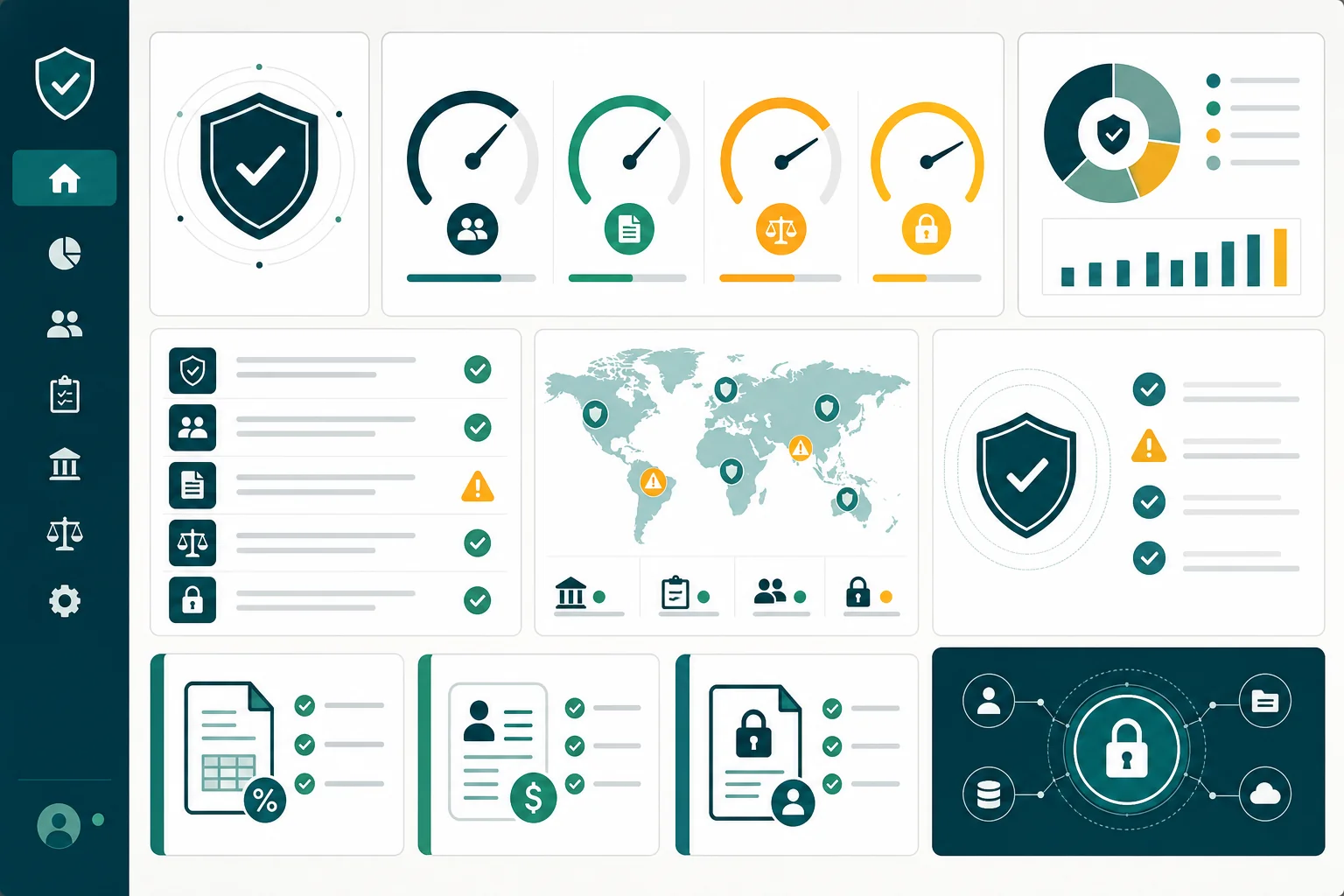
Poland sits at a 3.5 out of 5 on CBREX's internal compliance complexity scale, moderate-to-high for a first-time foreign employer, manageable with the right local payroll partner.
| Dimension | Score (1, 5) | Key Detail |
|---|---|---|
| Tax complexity (PIT + CIT) | 3/5 | Two-band PIT (12% / 32%); CIT at 19% (9% for small taxpayers). Annual tax returns required. Employer withholding obligations. |
| Social / pension (ZUS) | 4/5 | Employer ZUS contributions approximately 20-21% of gross salary. Multiple contribution types (pension, disability, accident, labour fund). Monthly declarations mandatory. |
| Payroll cycle | 2/5 | Monthly payroll is standard and straightforward. Payslips must be provided. Salary must be paid by the last working day of the month. |
| Data privacy (GDPR) | 4/5 | Poland enforces GDPR strictly. Candidate data handling, CV storage, and background check consent must be GDPR-compliant. The Polish DPA (UODO) is active. |
| Background check limits | 3/5 | Criminal record checks (KRK) are permitted for roles where legally required. General employment background checks must be proportionate and GDPR-compliant. Credit checks are restricted. |
Bottom line: Poland is not a compliance minefield, but it is not a simple market either. The ZUS contribution burden is the biggest surprise for Indian companies used to PF/ESI structures. Get a local payroll bureau or EOR in place before your first hire, do not try to run Polish payroll from India.

Most Indian companies trying to hire in Poland from India face the same problem: their existing agency relationships are India-centric, and the one or two international agencies they know are generalists who cover Poland as a footnote in a 40-country brochure. That is not how you fill a specialist pharma regulatory role in Kraków or a senior data engineer in Warsaw.
CBREX operates differently. The platform connects companies to a network of 4,000+ specialist recruiting firms across 33 countries, including Poland-focused agencies with deep expertise in tech, healthcare, pharma, manufacturing, and shared services. When you post a Poland role on CBREX, the AI matching engine (C Map) routes it to the agencies most qualified to fill that specific role in that specific market, not the agencies with the biggest marketing budget.
The results speak to the model's efficiency: 6,500+ global hires completed across the network, an average fulfillment time of 17 days from brief to shortlist, and a 98% shortlist ratio, meaning nearly every candidate presented has been pre-screened and validated before it reaches your hiring manager's desk.
The commercial model is equally straightforward: pay-on-hire only. No retainers. No upfront fees. No seat licences. One contract covers every agency in the network across every country. For an Indian mid-market company managing multi-geo hiring across Poland, Germany, Singapore, and the UAE simultaneously, that single-contract model eliminates the vendor sprawl that typically consumes 20-30% of a TA team's bandwidth.
CBREX's strongest Poland verticals align directly with where Indian companies are building out: Healthcare, Pharma, IT/Software, and Manufacturing. If your Poland headcount sits in any of these sectors, the specialist agency match rate is particularly high.
For context on how this model compares to traditional agency arrangements, see Recruitment Marketplace vs Staffing Agency: India 2026. And if you are managing Poland as part of a broader multi-country expansion, Global Hiring from India: The 2026 Complete Guide covers the full strategic framework.
These are the errors that show up repeatedly when Indian companies first try to hire in Poland, and the ones that cost the most time and money to fix.
The salary on the offer letter is only part of what you will actually spend. Here is the full cost-to-hire breakdown for a mid-level hire in Poland.
Employer ZUS contributions cover pension (9.76%), disability (6.5%), accident insurance (approximately 1.67%, varies by industry risk), Labour Fund (2.45%), and Guaranteed Employee Benefits Fund (0.1%). Total employer burden: approximately 20-21% on top of gross salary. This is non-negotiable and applies to all employment contracts.
Specialist agency fees in Poland typically run 15-20% of annual gross salary for mid-to-senior roles. Leadership and niche roles can reach 22-25%. On a PLN 150,000 gross salary, that is PLN 22,500, 37,500 (approximately ₹4.8L–₹8L) per placement. Under a pay-on-hire model like CBREX, this fee is only triggered on a successful hire, no placement, no fee.
For a detailed breakdown of how agency fees are structured and what you are actually paying for, see Recruitment Agency Cost in India: What You're Really Paying, the fee mechanics translate directly to Poland engagements.
Severance is mandatory for redundancy-based dismissals (not performance-based). The amount depends on tenure: 1 month's salary (under 2 years), 2 months' (2-8 years), 3 months' (over 8 years). Maximum severance is capped at 15 times the national minimum wage. Budget for this in any scenario planning for a Poland headcount.
| Annual gross salary | PLN 150,000 |
| Employer ZUS (~20.5%) | PLN 30,750 |
| Recruiter fee (17% of gross) | PLN 25,500 |
| Private health insurance (12 months) | PLN 3,600 |
| 13th-month bonus (if applicable) | PLN 12,500 |
| Total Year-1 Cost | PLN ~222,350 (approx. ₹47.8L) |
This is a planning estimate. Actual costs vary by role, city, and negotiated terms. The key takeaway: the true cost of a PLN 150,000 hire is approximately 48% higher than the gross salary line alone.
Use this checklist to move from headcount approval to first hire without missing a critical step.
Ready to source vetted specialist talent in Poland? CBREX connects Indian companies to 4,000+ specialist recruiting firms across 33 countries, including Poland-focused agencies in tech, pharma, manufacturing, and shared services. Pay only when you hire. One contract. No retainers.
If you are managing Poland as part of a broader multi-country hiring programme, the Pharma Manufacturing Cross-Border Hiring: A 5-Country Playbook is a useful companion read, Poland features prominently as a key Eastern European hub for Indian pharma companies expanding into the EU.
For Indian mid-market companies at the start of their international hiring journey, the RPO vs Agency India: Which Model Wins for Mid-Market Companies guide helps you decide which operating model fits your current hiring stage before you commit to a Poland-specific structure.
Poland is a high-quality, competitive market. The companies that hire well here are the ones that go in with accurate data, the right local partners, and a process built for European employment norms, not a copy-paste of their India hiring playbook. Start with the right foundation, and Poland becomes one of the most productive talent markets in your global portfolio.
Start hiring in Poland, Book a Demo with a CBREX specialist and get matched to Poland-focused recruiting firms in your sector within 24 hours. No retainers. No upfront fees. Pay only when you hire.


