Read Time:
17 Mins
Passive Talent Sourcing Strategy: Fix What's Failing


Picture a TA leader at a fast-growing Indian mid-market company. She has a VP of Sales role open in Singapore and a QA Lead position in Germany. She posts both on the usual platforms, briefs two agencies, and waits. Three weeks later, she has 22 CVs — all from candidates who applied to something. Not one of them is the calibre she needs. The roles stay open another six weeks. The business bleeds opportunity cost every day. The problem isn't her process. It's that her passive talent sourcing strategy was never built to reach the people who weren't looking.
According to LinkedIn's global talent research, roughly 70% of the global workforce is made up of passive talent — professionals who are not actively searching for a new job but would consider the right opportunity if it found them. The remaining 30% are active candidates: people refreshing job boards, updating their profiles, and submitting applications.
Here's the uncomfortable truth for most TA teams: almost every tool in their standard stack — job boards, ATS pipelines, AI-only sourcing platforms, is built exclusively for that 30%. The passive majority is structurally invisible to these tools. They don't apply. They don't show up in keyword searches on Naukri. They don't respond to cold InMails from recruiters they've never heard of.
For India-founded companies hiring globally, this gap is especially costly. When you're trying to fill a regulatory affairs specialist in Germany, a fintech compliance lead in Singapore, or a supply chain director in the UAE, the best candidates for those roles are almost certainly passive. They're employed, performing well, and not looking. Your job board strategy will never reach them.
The best hire you'll make this year isn't on Naukri. They're not refreshing LinkedIn job alerts. They're doing their job, and doing it well, somewhere you haven't looked yet.
Most companies don't have a passive talent sourcing strategy. They have an active candidate strategy with a few passive-sounding tactics bolted on. Here's where the gaps typically appear:
The result? Roles stay open longer, cost-per-hire climbs, and the business settles for the best available active candidate rather than the right person. If you want to understand how much that's actually costing you, the analysis in Time to Hire: The Hidden Cost of Roles Left Open makes the financial case clearly.
Before you redesign your passive talent sourcing strategy, you need an honest picture of where your hires are actually coming from. Most TA teams are surprised by what the data shows.
Pull every hire from the past year and tag each one by source: job board application, agency referral, internal referral, direct approach, LinkedIn outreach, or other. Then separate active candidates (they applied) from passive ones (they were approached). For most mid-market companies, passive hires represent a small fraction of total volume, but a disproportionately large share of senior and specialist roles.
Look specifically at the roles that took longest to fill or went unfilled. What sourcing channels were used? Were specialist agencies engaged? Was there any structured outreach to passive candidates, or did the process rely entirely on inbound applications? The gaps in your channel mix are usually where your passive sourcing strategy needs the most work.
Not every role needs a passive sourcing strategy. High-volume, entry-level, or easily replaceable roles can be filled efficiently through active channels. The passive sourcing investment pays off most on senior, niche, and cross-border roles, exactly the mandates that matter most to your business outcomes. Understanding your true cost per hire by role type will help you prioritise where to focus.
The single most effective passive talent sourcing channel is one that most TA teams underinvest in: specialist recruiters with genuine domain and geographic expertise. Not generalist agencies. Not job board aggregators. Specialist firms whose entire business model depends on maintaining warm relationships with passive talent in a specific function, industry, or market.

A specialist recruiter who has placed five regulatory affairs professionals in Germany over the past three years has something no AI platform can replicate: trust. Those candidates know the recruiter. They've had real conversations. When that recruiter calls with a compelling opportunity, the passive candidate listens. Cold InMails from unknown senders get ignored. Warm introductions from trusted advisors get meetings.
This is the fundamental reason why specialist agencies consistently outperform job boards for hard-to-fill roles. It's not about technology. It's about relationships built over years in a specific domain.
India-founded companies expanding globally face a compounded version of this problem. You need passive talent in Singapore, Germany, and the UAE, simultaneously, across different functions, with different compliance contexts. No single agency has that reach. And managing 15 separate agency relationships across those geographies creates the vendor sprawl that slows everything down.
This is where a platform like CBREX changes the equation. With a network of 4,000+ specialist recruiting firms across 33 countries, all accessible through a single contract, TA teams can activate domain-specific passive talent pipelines in any geography without adding a single new vendor relationship to manage. The specialist reach is there. The administrative chaos isn't.
The best passive candidates often come through second-degree referrals. A specialist recruiter doesn't just know the candidate, they know who that candidate knows. Structured referral pipelines, maintained by specialist firms with deep domain networks, consistently produce higher-quality passive candidates than any direct outreach channel. Building this into your sourcing strategy is not optional for senior and niche roles. It's the strategy.
AI has a genuine and important role in a passive talent sourcing strategy. The mistake most companies make is expecting AI to do the relationship work, the part that requires human trust, nuance, and judgment. AI is exceptional at the parts of recruiting that are fundamentally data problems. It struggles with the parts that are fundamentally human ones.
AI cannot build trust with a passive candidate who has no reason to move. It cannot read the subtext in a conversation about why someone might consider leaving a stable role. It cannot negotiate the nuanced package conversation that gets a high-performing passive candidate across the line. These are human skills, and they remain irreplaceable in passive sourcing. The hybrid model works precisely because it assigns each task to the tool best suited for it.
A well-designed passive talent sourcing strategy isn't a single tactic. It's a sequence, and the order matters. Here's how the hybrid AI-human model works in practice:
This sequence is especially powerful for the roles that matter most: senior leadership hires, niche technical specialists, and cross-border mandates where the passive talent pool is small and the cost of a wrong hire is high. For a deeper look at how this applies to leadership roles specifically, see Leadership Hiring India: The 2026 Complete Guide.
There's a passive sourcing problem that most TA teams create without realising it: multiple agencies approaching the same passive candidate with the same role, from the same company, within days of each other. For a passive candidate who wasn't looking to begin with, this is a red flag. It signals disorganisation. It damages your employer brand before the first conversation has even happened.
Vendor sprawl, managing 10, 15, or 20 separate agency relationships with separate contracts, separate briefings, and no coordination, is one of the biggest silent killers of passive talent pipelines. The candidate experience suffers. The TA team's time is consumed by administration. And the quality of the briefings each agency receives degrades because there's no single source of truth.
CBREX's model addresses this directly. One contract covers the entire network of 4,000+ specialist agencies. One briefing reaches the right agencies, coordinated by the platform. One invoicing cycle replaces the administrative chaos of multiple vendor relationships. Passive candidates receive a coherent, professional outreach experience, not three calls from three different agencies in the same week.
For companies managing multi-country hiring mandates, this matters even more. The operational complexity of coordinating agencies across Singapore, Germany, and the UAE through separate contracts is significant. Consolidating through a single platform doesn't just reduce admin, it actively improves the passive candidate experience, which directly improves conversion rates. The full case for consolidation is made in Vendor Consolidation in Recruitment: Top 10 Questions Answered.
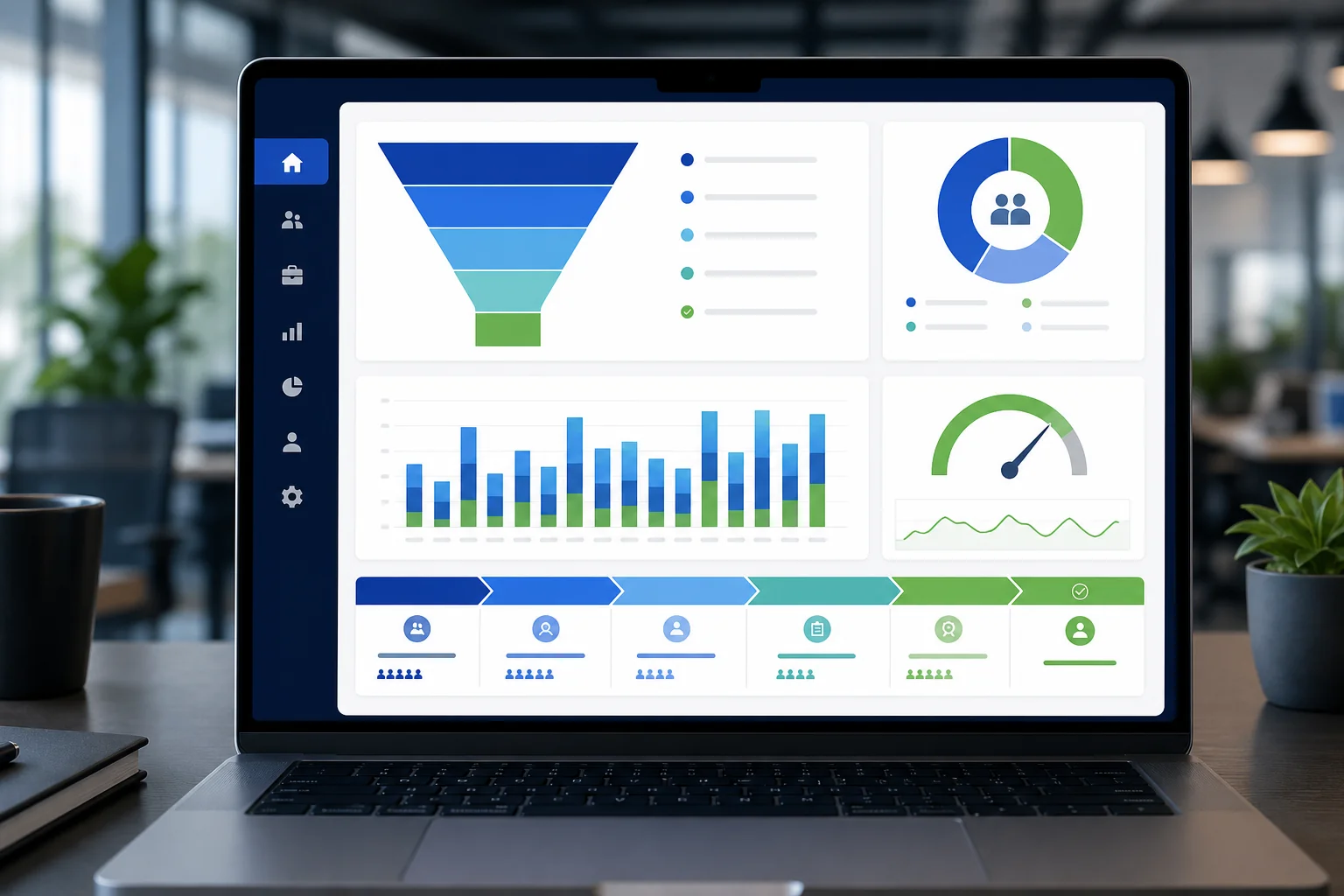
A passive talent sourcing strategy without measurement is just activity. The metrics that matter are different from standard recruitment KPIs, because passive sourcing operates on a different timeline and through different channels than active hiring.
Building a measurement framework that connects these metrics to business outcomes, revenue impact of open roles, retention rates by hire source, performance ratings by sourcing channel, is what separates a mature passive talent sourcing strategy from a collection of tactics. The broader framework for making this case internally is covered in RPO Services India: The Complete 2026 Service Guide.

Let's return to the TA leader from the opening. She has a VP of Sales role in Singapore and a QA Lead in Germany. Both are senior, both are niche, and both require passive talent. Here's what the hybrid AI-human model looks like in practice:
She posts both roles on CBREX. C Map immediately routes the Singapore VP of Sales mandate to three specialist agencies with proven track records in commercial leadership hiring across Southeast Asia, firms whose recruiters have placed similar profiles at comparable companies and maintain warm relationships with passive candidates in that market. The Germany QA Lead goes to two specialist agencies with deep networks in German manufacturing and quality assurance, one of which has placed regulatory professionals at pharma companies in the DACH region for over a decade.
Within 48 hours, both agencies are in active conversations with passive candidates, not cold outreach, but warm calls to professionals they already know. Within ten days, C Screen has validated incoming CVs and produced stack-ranked shortlists for both roles. The hiring manager reviews six pre-screened, interview-ready candidates for each position. Both roles are filled within five weeks.
Compare that to the alternative: two job board postings, two generalist agencies, 22 CVs from active candidates, six weeks of waiting, and two roles still open. The difference isn't the technology. It's the combination of the right technology and the right human relationships, working in sequence.
For companies managing global hiring across multiple geographies simultaneously, this model scales in ways that neither pure AI platforms nor traditional agency relationships can match. The full picture of how this works for Indian companies expanding internationally is in Global Hiring from India: The 2026 Complete Guide.
A passive talent sourcing strategy is a structured approach to identifying, engaging, and converting professionals who are not actively looking for a new job. Unlike active sourcing, which relies on job postings and inbound applications, passive sourcing uses specialist recruiter networks, referral pipelines, and targeted outreach to reach high-performing candidates who are currently employed and not on the market.
AI-only platforms are built to process and match data from candidates who have made themselves visible, by updating profiles, applying to roles, or appearing in public databases. Passive candidates, by definition, haven't done any of these things recently. They're not in the active pool. AI can help screen and rank candidates once they're identified, but it cannot replace the human relationships and trust networks that specialist recruiters use to reach passive talent in the first place.
Specialist recruiters build long-term relationships with professionals in their domain over years of placements, referrals, and industry engagement. When a relevant opportunity arises, they reach out through warm, trusted channels, not cold messages. The candidate knows the recruiter, trusts their judgment, and is more likely to have a genuine conversation about a move. This relationship-based access is the core asset that specialist agencies bring to passive sourcing.
CBREX combines AI-powered vendor matching (C Map) with a network of 4,000+ specialist recruiting firms across 33 countries. When a role is posted, AI routes it to the most relevant specialist agencies for that domain and geography. Those agencies activate their passive talent networks. Incoming candidates are screened by C Screen AI and stack-ranked before reaching the hiring manager. The entire process runs through a single contract and integrates with your existing ATS, giving you specialist passive talent reach at global scale without the vendor management overhead.
A passive talent pipeline for a specific role or function typically takes four to eight weeks to activate from scratch, depending on the seniority and scarcity of the target profile. However, with a specialist agency network already in place, as with CBREX, the activation time is significantly shorter because the recruiter relationships and passive networks already exist. The investment in building passive pipelines pays off most on roles that are consistently hard to fill or strategically critical to the business.
The companies winning the talent war in 2026 are not the ones with the biggest job board budgets. They're the ones who have built a passive talent sourcing strategy that reaches the 70% of the workforce who aren't looking, through specialist human relationships, activated at scale by AI. If your current approach is producing shortlists full of active candidates who are already interviewing everywhere else, it's time to change the model.
CBREX gives TA teams at India-founded and globally expanding companies the infrastructure to do exactly that: 4,000+ specialist agencies across 33 countries, AI-powered matching and screening, a single contract, and a pay-on-hire model that means you only pay when the right person joins. No retainers. No seat licences. No recycled active candidate pools.
If you want to see what a hybrid AI-human passive sourcing strategy looks like for your specific hiring mandates, book a demo with the CBREX team and we'll walk you through exactly how the model works for your roles, your geographies, and your business. Or, if you'd prefer to start by understanding what your current hiring approach is really costing you, calculate your hidden hiring tax on the CBREX platform. The numbers are usually more uncomfortable than expected, and more motivating.
You can also reach out directly if you'd rather have a conversation first. Either way, the passive talent your business needs is out there. The question is whether your sourcing strategy can reach them.