Read Time:
Recruitment Agency in Thailand: How to Hire Through Vetted Specialist Agencies (2026)


To hire through a recruitment agency in Thailand, write a Thailand-specific brief with a market-level pay range, route it to a licensed specialist agency that already places that profile, screen every shortlist in layers, and pay only when the person joins. One contract can cover all of that, so you avoid signing a separate agreement for every agency.
That is the model we run at CBREX. Our marketplace gives employers one contract and one invoice across 4,000+ vetted recruiting firms in 55 countries, and Thailand is one of them. We have made 6,500+ global hires, and employers pay only after the candidate joins. Below are the steps, in order, with what to check at each one.
The most common mistake we see from India-based GCC heads is a brief that asks for very high quality talent while the pay band sits below what the local market pays. No agency can fix that gap. Strong candidates simply decline, and the search drags on.
Before you brief anyone, benchmark the salary against what Thai employers actually pay for the same profile. Our guide on hiring through a recruitment agency in Malaysia uses the same logic for a neighbouring market, and it applies here as well.
A good brief for Thailand has five parts:
Skills and expertise drive routing on our platform. Requirements are open worldwide, and recruiters do not need to sit where the job is located. Still, for Thailand roles that need Thai language or local market knowledge, say so in the brief so the match stays tight.
Thai law requires recruitment companies doing domestic or outbound recruitment to hold a licence from the Department of Employment under the Ministry of Labour. The department publishes a list of licensed agencies, and you can look up the company name and licence number there. Do this check for any agency you work with directly.
The International Organization for Migration also publishes guidance for employers on working with labour recruiters. It is written for labour migration, but its basic rules carry over: work only with recruiters that are licensed or registered to provide recruitment services, and keep legal compliance and transparent terms in the contract.
Whether you contract directly or through a marketplace, get these terms in writing:
One more point on employment. An agency finds and screens the person; it does not employ them. A foreign national who will work in Thailand needs a work permit before starting work, and permits are normally sponsored by a Thai-registered entity. If your company has no Thai entity yet, settle the employing route with a Thai employment adviser before you make an offer.
Vendor sprawl slows Thailand hiring because every extra agency brings its own contract, invoice, brief and follow-up cycle, which eats TA bandwidth before a single candidate is reviewed. Duplicate submissions and uneven candidate quality add more rework, so recruiters spend their time managing vendors instead of interviewing candidates.
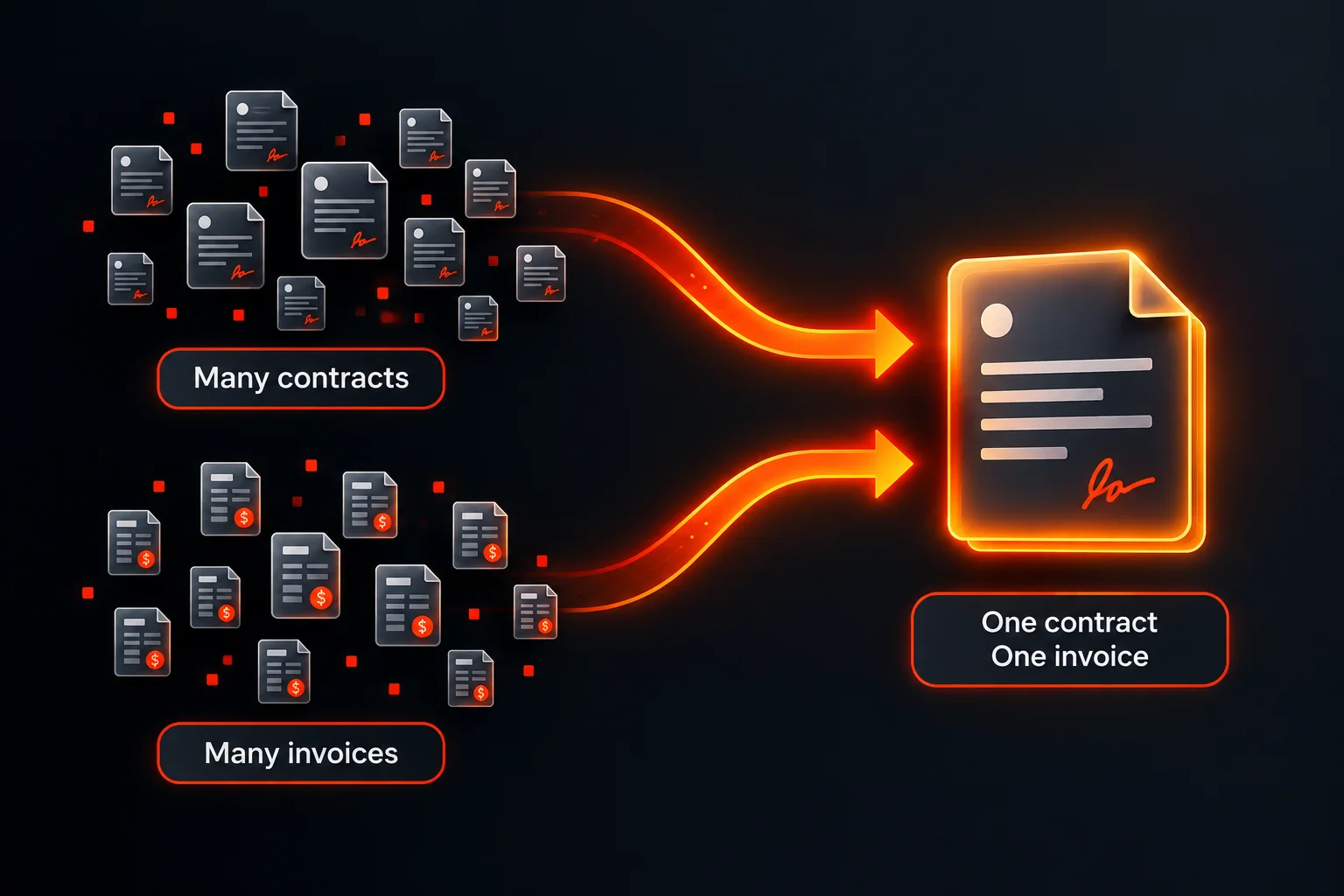
The pattern is familiar to any TA head who has opened a new country. You sign with one agency for sales, another for engineering, a third for finance, and each wants its own paperwork. Then niche roles stall because no single firm covers them. The same pain that a vendor management system (VMS) tries to solve shows up in a new country, at higher cost.
Consolidation is the fix, and the numbers from our own work show the scale. One client consolidated 54 agency contracts into a single CBREX contract. In an AI talent example, 65+ specialist vendors were consolidated the same way.
When two agencies submit the same candidate for one role, the duplication check built into the CBREX platform catches it at the moment of upload. The second agency is told it is a duplicate and cannot upload the candidate. That removes the credit disputes and double-shortlisting that waste hiring manager time.
A single contract works by putting one agreement and one invoice over a marketplace of vetted agencies. CBREX gives employers one contract covering 4,000+ recruiting firms across 55 countries, including Thailand. Its AI matching, C Map, routes each role to the specialist agencies most likely to place that profile.
You post the role once. C Map then picks agencies by skills and expertise, not by a generic directory listing. That matters in Thailand, where a firm strong in manufacturing engineers may have no reach in digital or finance talent.
Supply is the other worry with agency models. If your chosen firm goes quiet, the search stops. We add new agencies to the marketplace on demand, so specialist suppliers can be brought in quickly when a role needs them. A standalone VMS does not offer that.
The marketplace is also multi-country by design. If you are hiring in Thailand and elsewhere at the same time, the same contract covers both. Employers expanding across Asia may also want to read our country guides for China and the UAE.
Three-level screening removes weak profiles before you see them. Each CV passes an agency pre-screen, then C Screen AI validation, then stack ranking, so hiring managers review a short, ordered list instead of a raw pile. Clients saw interview-to-offer ratios of 1:3 to 1:4 in recent searches after this screening.

Here is what each level does:
The point is not to replace recruiters with software. AI-only platforms tend to recycle active job seekers. Specialist agencies reach passive, top-performing people who are not applying anywhere, and the AI layer keeps the quality of what they submit consistent.
Speed follows from this. The average time to source on CBREX is between 4 and 48 hours. Sales candidates in particular have a short shelf life, so we tell clients to complete the process within three weeks.
The commercial model is simple: one contract and one invoice, with no retainers, seat licences or monthly fees. Recruiter invoices are raised only after the candidate joins the client's organisation. If nobody is hired, you owe nothing, which makes cost per hire far easier to forecast.

Compare the three common fee routes:
| Fee route | When you pay | Risk to you |
|---|---|---|
| Retainer | Upfront or in instalments, before a hire | You pay even if the search fails |
| Upfront or monthly fees | Seat licences, subscriptions or setup charges | A fixed cost whether or not you hire |
| Pay-on-hire (CBREX) | After the candidate joins | Fee is tied to a completed hire |
The fee itself depends on the country the hire is made in, so agree the percentage for each Thailand role before the search opens. If you want a broader view of how agency charges vary, see our guide on recruitment agency fees by country in the blog.
For larger buyers, our flat-pricing offering is highly effective when agency spend exceeds USD 500,000 per annum. Smaller teams usually do better on the standard pay-on-hire route. To see where your own agency spend leaks, you can calculate your Hidden Hiring Tax.
Plan for first qualified candidates within about 24 to 72 hours of opening the role, then a few weeks to interview, offer and join. These ranges are CBREX's reported timelines from other markets, not a Thailand guarantee, so treat them as a planning baseline and adjust for notice periods and work permits.
| Reported by CBREX | Timeline |
|---|---|
| Platform average, time to source | 4 to 48 hours |
| US sales role, opening to qualified candidates | 24 to 72 hours |
| UK role, posting to first sourced candidate | 48 hours |
| EU roles, sourcing, then hiring | 24 to 72 hours, then about 3 weeks |
| Germany search with local or EU candidates, no visa step | 30 to 45 days |
| India-based role, typical time to hire | 15 to 45 days |
Two things stretch a Thailand timeline. First, notice periods: a local candidate who is currently employed may need weeks before joining. Second, work permits for foreign nationals, which add a step that local hires do not need. Neither is unique to us; build both into your plan from day one.
To keep momentum, set a decision date for each interview round when you brief. Strong candidates accept other offers while a process idles.
You now have the order of work: benchmark pay, check licences and terms, consolidate vendors, screen in layers, and pay on hire. The next move is to put one real Thailand role through it and measure the shortlist quality and speed against your current agencies.
If you want to see how C Map would route a specific Thai requirement, book a demo and bring the role brief. You can also talk to our team about consolidating an existing agency pool.
Recruiters based in Thailand can join too. Recruitment, staffing and executive search agencies, and self-employed recruiters, may sign up free, fill global requirements and earn a commission on each successful hire.
New firms can sign up as a recruiting firm, and existing partners can log in as a talent supplier. Sign-ups get a Quickstart Guide and a dedicated Technical Support team, and each person must use an official company email ID, since personal addresses are not validated.