Read Time:

72% of employers across 41 countries now say they cannot fill open roles, and for the first time, AI skills, not engineering or traditional IT, top the list of hardest-to-find capabilities. That single shift reframes the talent shortage 2026 for India-HQ companies hiring abroad: the bottleneck has moved from headcount to specific, scarce capability, and generic sourcing no longer closes the gap.
Metric | Figure | Source |
|---|---|---|
Employers reporting difficulty filling roles (global) | 72% | ManpowerGroup 2026 survey |
Employers surveyed | 39,063 across 41 countries | ManpowerGroup 2026 survey |
Hardest skill to find globally | AI Model & Application Development, cited by 27% | ManpowerGroup 2026 survey |
Second-hardest skill globally | AI Literacy, cited by 26% | ManpowerGroup 2026 survey |
Traditional IT & Data roles, by comparison | 18% | ManpowerGroup 2026 survey |
APME region difficulty rate | 71% | ManpowerGroup 2026 survey (APME) |
The numbers describe a shortage that has changed shape, not just size. ManpowerGroup surveyed 39,063 employers across 41 countries and found that 72% report difficulty filling roles, a figure that has sat stubbornly high for several years running.
What changed in 2026 is the ranking underneath that headline. For the first time in the survey's history, AI skills overtook engineering and traditional IT as the hardest capability to hire. AI Model & Application Development leads at 27%, AI Literacy follows at 26%, both ahead of traditional engineering, sales and marketing, and IT and data roles at 18% to 21%.
The regional breakdown matters for India-HQ buyers specifically. Across Asia Pacific and the Middle East, 71% of employers report hiring difficulty, and AI Model & Application Development (27%) and AI Literacy (26%) again outrank traditional IT & Data roles (18%) as the region's hardest skills to source.
The gap isn't that AI talent doesn't exist. It's that the people who have it aren't browsing job boards, and most sourcing channels were built to find people who are.
Demand for applied AI capability grew faster than the supply of people who can both build models and ship them inside a real business. Generic engineering talent is deep; the hybrid skillset, someone fluent in AI who also understands production code and the commercial context, is thin.
This scarcity hits a structural weakness in how most companies source talent. Job boards and even AI-matching platforms largely recycle the same pool of active job seekers. Most strong AI practitioners are already employed, not applying anywhere, and reaching them takes a sourcing channel built for passive candidate discovery, not for harvesting resumes that are already public.
That is a direct argument for working through a specialist agency network built to fill hard-to-fill roles rather than broadening a single generalist search. Niche recruiters who already have relationships in a sub-specialty get further, faster, than a job posting ever will.
India-founded companies expanding into the US, UK, EU and Southeast Asia face a version of the shortage that domestic-only employers never see: they need scarce AI and engineering talent in markets where they have no existing vendor relationships, no local compliance knowledge, and no established employer brand.
The usual fix, signing a separate agency in each new country, multiplies administrative load exactly when speed matters most. A TA team juggling five contracts, five invoicing cycles and five sets of SLAs for five countries loses weeks to coordination before a single resume moves. That friction is explored further in how Indian companies hire in Southeast Asia and in guidance on staffing US roles without routing every hire through a single costly channel.
Companies should respond by diversifying sourcing beyond active-candidate platforms, routing scarce-skill roles to specialist agencies with passive-candidate reach, and consolidating multi-country vendor relationships under one contract instead of one per market. Speed and reach now matter more than headcount on the recruiting team.
Three concrete moves follow from the survey data. First, treat AI and hybrid engineering roles as niche searches from day one, not generalist postings that get escalated after they stall. Second, build sourcing capacity in the specific countries you are hiring into, rather than running everything from a single domestic desk. Third, measure vendor performance by shortlist quality, not just headcount of agencies engaged.
CBREX was built around the exact problem the 2026 survey describes: scarce, specific skills spread across markets a single internal team cannot cover alone. The platform routes job requirements to a curated network of 4,000+ vetted recruiting firms across 55 countries, all under one contract and one invoice, so a TA leader in Bangalore can open a search in Berlin or Jakarta without negotiating a new agreement first.
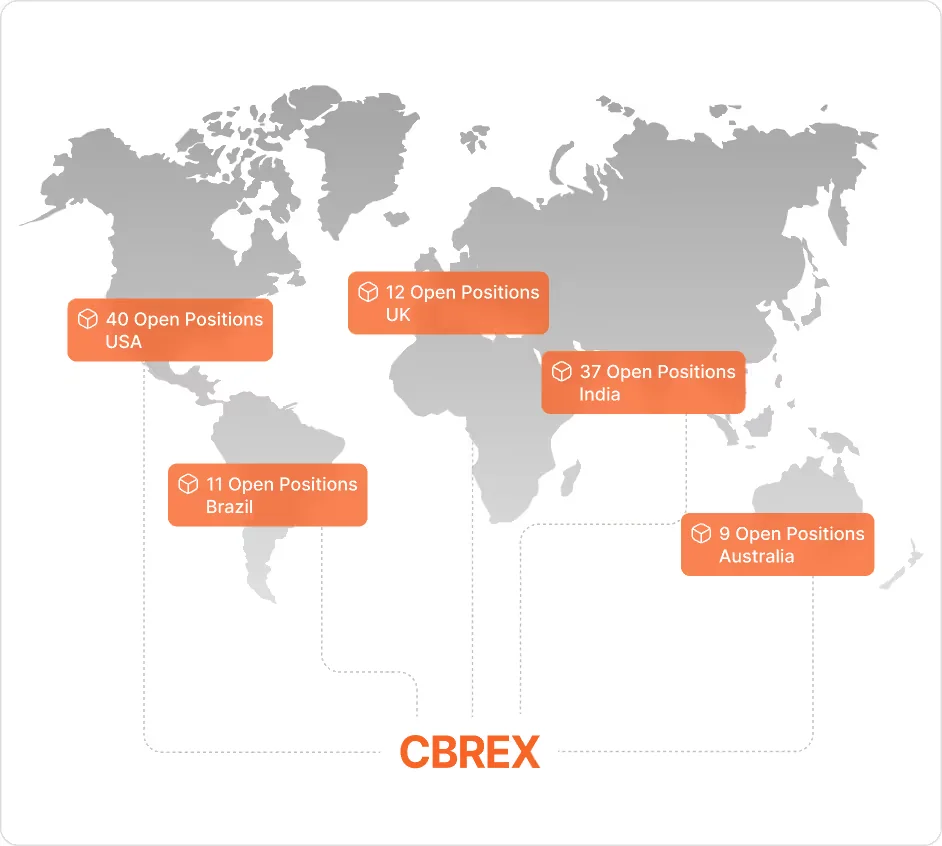
CBREX reports 6,500+ global hires made this way, with a 98% resume shortlist ratio from its AI-assisted screening layer, C MAP, which matches each requirement to the recruiting firms best positioned to fill it. Clients pay CBREX only when a hire is actually made, which removes retainers and seat fees from the scarce-skill search entirely.
That model suits companies with revenue between roughly INR 50 crore and INR 5,000 crore that are hiring critical roles outside India, exactly the segment squeezed hardest by both vendor fragmentation and the AI skills gap. More detail on the mechanics sits in how specialist agencies fill niche skill roles.
Each sourcing model handles scarcity differently, and picking the wrong one for a given role wastes months.
| Model | Best for | Pricing pattern | Speed on scarce roles |
|---|---|---|---|
| In-house TA team | Steady-state local hiring | Fixed salary cost | Slow on niche or cross-border roles |
| Single niche agency | One hard-to-fill role in one country | Contingency or retained fee | Fast within its specialty, limited reach outside it |
| Traditional RPO | High-volume, repeatable hiring | Monthly management fee plus per-hire cost | Moderate; built for volume, not rare skills |
| Recruitment marketplace (CBREX model) | Scarce skills across multiple countries at once | Pay-on-hire, flat pricing above 500K USD annual agency spend | Fast; routes to specialist firms per market simultaneously |
For a deeper comparison of outsourced hiring models against marketplace sourcing, see RPO vs recruitment marketplace in India.
Consider a hypothetical mid-market SaaS company headquartered in Pune, expanding into the UK and needing a machine learning engineer fluent in production deployment, not just research. A single UK job posting draws dozens of resumes from active job seekers, none fitting the hybrid profile the 2026 survey flags as scarcest.
Routed instead through a specialist agency network with UK AI-hiring relationships, the search reaches passive candidates already employed at relevant companies. A three-level screen, agency pre-screen, AI validation, then stack ranking, narrows that pool to five to eight interview-ready candidates within weeks rather than months. The mechanics of that screening sequence are covered in detail separately; the result here is a shortlist built from people who were never going to apply on their own.
It is global: ManpowerGroup's 2026 survey covers 39,063 employers across 41 countries and finds 72% reporting difficulty, with the Asia Pacific and Middle East region close behind at 71%. No major market is exempt.
AI Model & Application Development and AI Literacy now top global and APME rankings, ahead of traditional engineering, IT and data roles, according to the same survey. The shift from engineering to AI as the top bottleneck happened for the first time this year.
Budget for specialist sourcing rather than volume postings. Pay-on-hire models, including CBREX's flat pricing once agency spend crosses 500K USD annually, avoid retainers that get paid whether or not a scarce role actually closes. A practical starting point is reviewing what cost per hire really looks like in 2026 before signing any vendor agreement.
The 2026 numbers are not a prediction; they are what 39,063 employers are living through right now. Companies that keep running every scarce-skill search through the same generalist channel will keep losing weeks they don't have.
If your team is chasing AI or engineering talent across more than one country, book a demo to see how CBREX's single-contract network across 55 countries shortens that search, or calculate your hidden hiring tax to see what vendor sprawl is currently costing you.
Recruiting firms looking to join the network can sign up as a talent supplier, and existing partners can log in here. For a direct conversation about a specific scarce role, let's talk.


