Read Time:
Recruitment Agency in Australia: How to Hire Through Vetted Specialist Agencies (2026)


To hire through a recruitment agency in Australia from India, brief one specialist firm per role type, route the requirement through a single contract, screen every shortlist in layers, and pay only when someone joins. That replaces a pile of separate agency agreements with one contract and one invoice.
CBREX is an AI-powered talent acquisition marketplace. We connect employers to a network of 4,000+ specialist recruiting firms across 55 countries, with Australia among them, under one contract. We have made 6,500+ global hires over the last 6-7 years, for companies from Series A/B start-ups to multi-billion-dollar Indian groups.
This guide is for TA and HR leaders at India-founded and global-HQ companies who already feel the strain of managing several agencies. It walks through the steps in order: why multiple contracts slow you down, how to brief, how matching works, how screening and pricing work, and what to check before a partner touches a senior search.
Each agency brings its own contract, fee terms and invoice, so every extra Australian search adds legal review, onboarding and chasing for your talent acquisition team. Hiring slows because the admin grows faster than the shortlists. One agreement covering many agencies removes that drag.
Australia is a market where specialist knowledge counts. Government buyers know this: the Australian Department of Finance runs a People Panel for recruitment and search services covering candidate pools, screening and shortlisting, interviews and verification, and selection reporting. A university such as ACU also keeps a panel of approved recruitment agencies under a Preferred Supplier Agreement for specialist and hard-to-fill vacancies. Panels exist because buyers want fewer, cleaner supplier relationships.
An Indian mid-market company hiring in Australia rarely has a panel. It has a few agencies it already knows, a new contract for each one, and a finance team matching invoices across currencies. The hidden cost is bandwidth, not only fees.
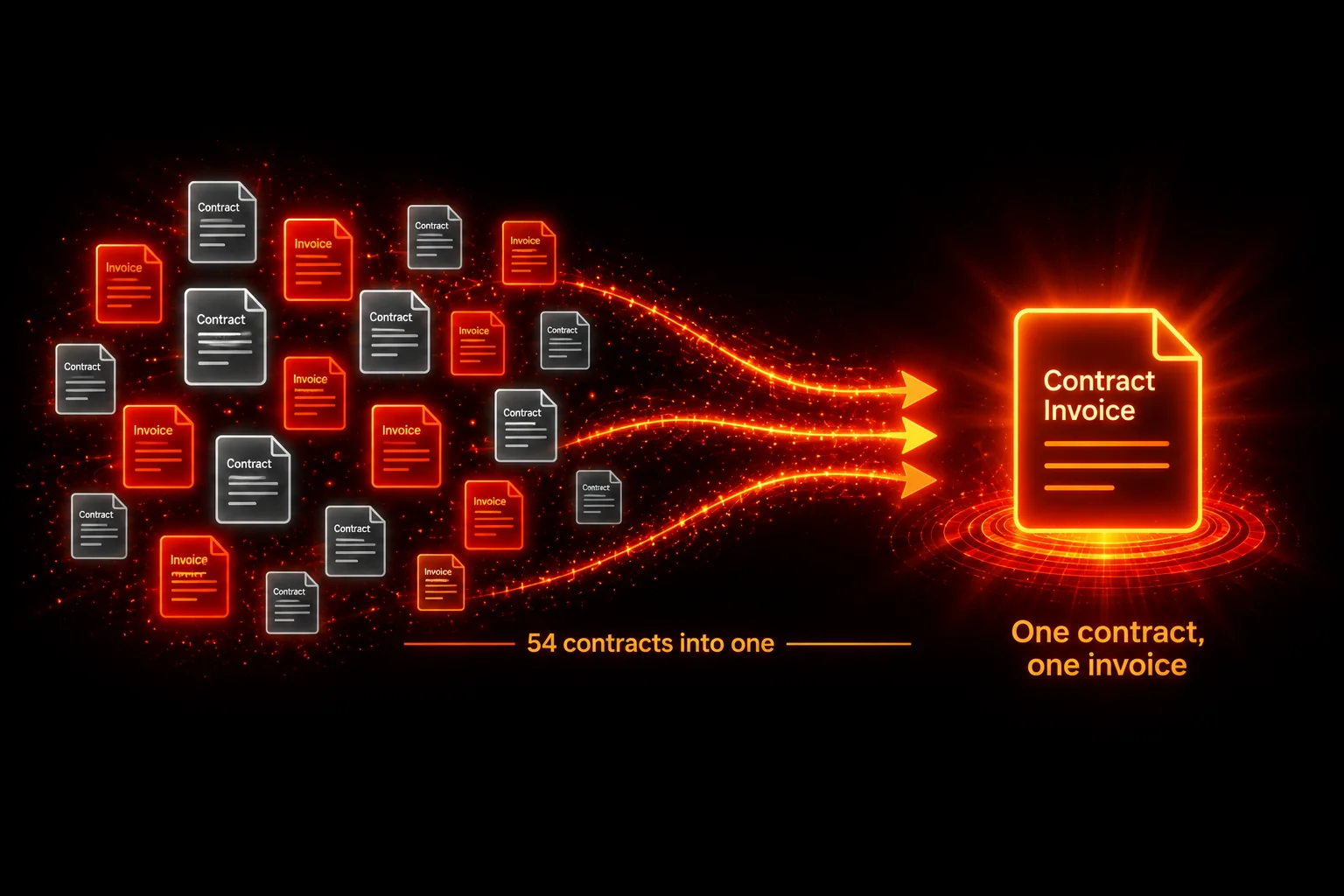
One client consolidated 54 agency contracts into a single CBREX contract. In an AI talent example, we consolidated 65+ specialist vendors. The aim is the same each time: one agreement, one invoice, and a wider set of specialists behind it.
CBREX adds new agencies to its VMS marketplace on demand, so supply does not dry up mid-search; standalone VMS tools do not offer that. You still work through one contract. That matters when a niche Australian role needs a specialist firm outside your current roster.
If you searched for "vms recruitment" or "vendor management system recruitment", this is the practical difference. A VMS tool organises suppliers. A marketplace with a managed network also supplies them.
Write a brief that states the skills, seniority, reporting line and a pay range set at market level, then route it to specialist agencies that already place that profile. A clear brief matters more than the number of agencies you approach, because specialists can only match what you define.
The most common mistake we see from India-based GCC heads in a first brief is asking for very high quality talent while not paying at that level. They do not benchmark the level of hiring against market salaries. Agencies see the gap on day one, and the best ones decline the search.
Before you post a role, settle these points:
A useful detail: recruiters on our platform can work on requirements outside their own country or region, based on skills and expertise. So the agency that fits your Australian role may not sit in Australia. What matters is the specialism and the network behind it.
Australia changed its employer-sponsored visa processing priorities again in late October 2026, with Ministerial Direction 121 setting five priority groups for subclass 482 applications. Processing times move with those rules. Check current figures with the Department of Home Affairs and an immigration adviser before you promise a start date to a candidate who needs sponsorship.
In practice: confirm in the brief whether the role needs a subclass 482 applicant, ask the agency to confirm right to work at first submission, and agree in writing who handles sponsorship.
Suppose an Indian company needs a senior engineer in Australia. Step 1: you write the brief with a market-level pay range. Step 2: you post it and C Map routes it to specialist agencies. Step 3: submissions are screened in three levels. Step 4: you interview and make an offer.
You then sign an employment contract with the candidate. Under CBREX you hold one contract and receive one invoice, raised only after the hire joins. Confirm award and superannuation obligations with an Australian adviser. Fee percentages for Australia are not published here, because fees depend on the country of the hire.
CBREX's AI vendor matching tool, C Map, takes your role and its requirements and routes it to the most qualified specialist agencies in a network of 4,000+ recruiting firms across 55 countries. You do not shortlist agencies yourself; the match is made on the specialism the role needs.
The steps are short. You post the role with its requirements. C Map routes it to the best-fit specialist agencies. Those agencies submit candidates, and each submission goes through screening before it reaches you.

Speed is where most teams feel the difference. CBREX's average time to source is between 4 and 48 hours. On a US sales search, the gap from role opening to receiving qualified candidates ran between 24 and 72 hours. Time to hire on India-based roles is typically 15-45 days. Each search differs, and a senior Australian role will not behave like a volume hire, so treat these as reference points and not promises.
When two agencies submit the same candidate for one role, the platform catches it. The duplication check runs at the moment of upload, so the second agency learns instantly that the candidate is a duplicate and cannot submit. That removes the usual "who found them first" dispute from your desk.
Every candidate passes three levels before you see a ranked list: an agency pre-screen, C Screen AI validation, and stack ranking. The point is that you interview fewer people who are closer to the brief, instead of reading unscreened CVs from several agencies.

Here is what each level does for you:
In a recent search, clients saw an interview-to-offer ratio of 1:3 to 1:4 after this three-level screening. In plain terms, roughly three to four interviews led to one offer in that search. That is one result from one engagement, not a guarantee for every Australian role.
Resume ownership stays with the uploading company or entity while the job is open. After the job closes, the resume is purged after a specified period. If your legal team asks about candidate data, start there.
With pay-on-hire pricing you pay nothing until a candidate joins your organisation. CBREX works on one contract and one invoice, with no retainers, seat licences or monthly fees, and recruiter invoices are raised only after the hire joins. Your recruitment spend then tracks real hires, not effort.
That changes budgeting in a practical way. You do not carry a fixed cost for searches that stall, and finance sees one invoice per hire instead of a stream from many firms. Agencies on the platform are paid by CBREX's model and do not pay subscription fees to join.
| Question | Retainer or markup model | Single-agency approach | CBREX marketplace |
|---|---|---|---|
| When do you pay? | Before a hire is made | Terms set by that one agency | Only when a hire is made |
| Contracts to manage | One per provider | One per agency | One contract for 4,000+ firms |
| Upfront commitments | Retainer or markup | Varies by agency | No retainers, seat licences or monthly fees |
| Reach for niche roles | Limited to that provider's network | Limited to that agency's network | Specialists across 55 countries |

Our replacement guarantee runs 30-90 days after joining, depending on the level of the hire. Ask for the exact period in writing for any senior Australian role, because the level of hire sets the length.
Flat pricing is most effective for companies whose agency spend exceeds USD 500,000 per annum. Below that, standard pay-on-hire terms usually fit. To see where you stand, use our Hidden Hiring Tax calculator and compare it with what your agencies cost today.
Check four things: whether the firm specialises in your exact function and seniority, whether its owners have deep industry networks, how it handles confidentiality, and what guarantee it gives if the hire leaves. Then confirm how duplicate submissions and candidate ownership are controlled before you let it work your role.
Use this as a pre-engagement checklist:
For confidential leadership roles, CBREX maps only boutique search firms whose owners are industry veterans with more than two decades of experience. They know how to be discreet when they take on a search, and they bring the industry networks to find leaders who are not looking.
Good candidates do not wait. In our US sales searches, the rule is to finish the process within three weeks because strong sales candidates have a very short shelf life. The same discipline applies to senior hires in Australia: agree interview slots before the shortlist lands, and name one decision-maker.
Australia works best as one market inside a wider hiring plan, run through the same contract as your other countries. If you are also hiring in Asia-Pacific, the same single agreement covers specialist agencies in Malaysia, Indonesia and beyond, so each new market does not restart contracting.
Many of our clients hire in several countries at once. If your plan includes neighbouring markets, our guides to a recruitment agency in Malaysia and a recruitment agency in Indonesia show the same steps. For English-speaking Europe, see our recruitment agency in Ireland guide.
If you also want to cut hiring cost, our
Start with one open Australian role. Write the brief with a market-level pay range, post it, and see which specialist agencies C Map routes it to. Book a demo and we will walk through your role, the matching, the three screening levels and the pay-on-hire terms.
Run a recruiting firm that places talent in Australia? You can sign up as a recruiting firm. Recruitment, staffing and executive search agencies, and self-employed recruiters, may join. Use your official email ID, because we do not validate accounts that use personal email. Signing up comes with a Quickstart Guide and a dedicated Technical Support team, and CBREX does not charge sourcing partners fees or subscriptions.
Questions before you commit? Let's talk about your Australian hiring plan.